Meat & Poultry Packaging

Choose a lidded or skin-packed tray for chilled beef, pork, lamb and chicken. The thickest portion, any exposed bone and the space at the sealing rim all affect the choice of tray, film and tooling.
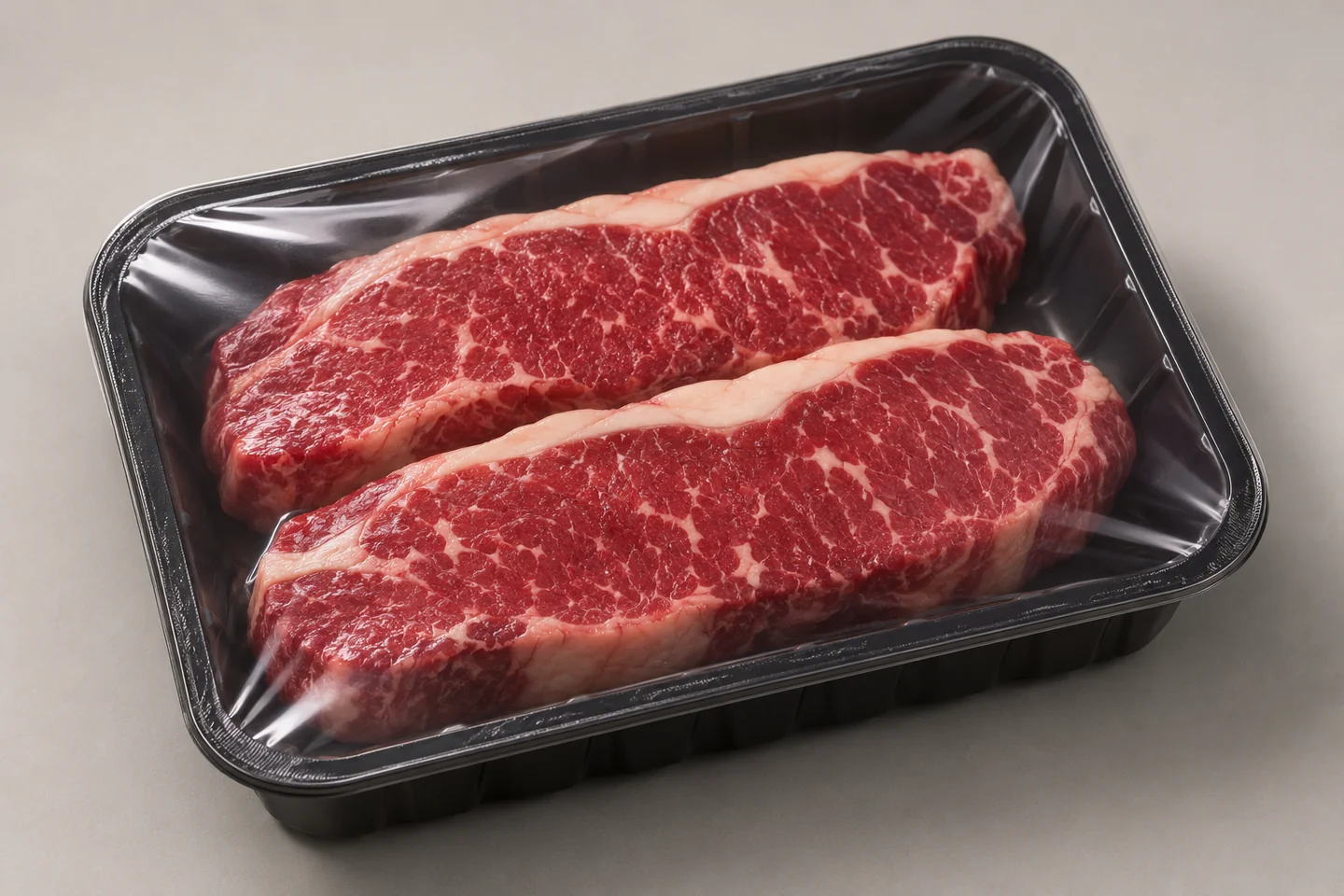
Two beef steaks beneath clear film in a shallow black tray

Match the tray to the cut

Beef steaks
Measure the thickest steak in the range. For a flat lid, check the clearance above that cut. For a skin pack, check how the film follows the steak down to the tray or backing board.
Beef steak skin-pack guide
Bone-in pork and lamb chops
Show where exposed bone sits when each chop is loaded. Keep bone ends away from the sealing rim and flag sharp points so film protection and tray depth can be reviewed.
Chilled meat packaging guide
Chicken drumsticks and breasts
For drumsticks, check the height where the thick ends meet. For breast portions, check whether overlapping pieces or liquid from the cut can reach the sealing rim.
Chicken drumstick MAP guide
Chicken cuts packaging guide

Choose a pack format

Modified atmosphere packaging (MAP)
The machine replaces air inside the tray with the selected gas blend before sealing. Specify the tray depth, the clearance needed above the tallest portion and your gas requirements if already defined.
Request a MAP quote
Vacuum skin packaging (VSP)
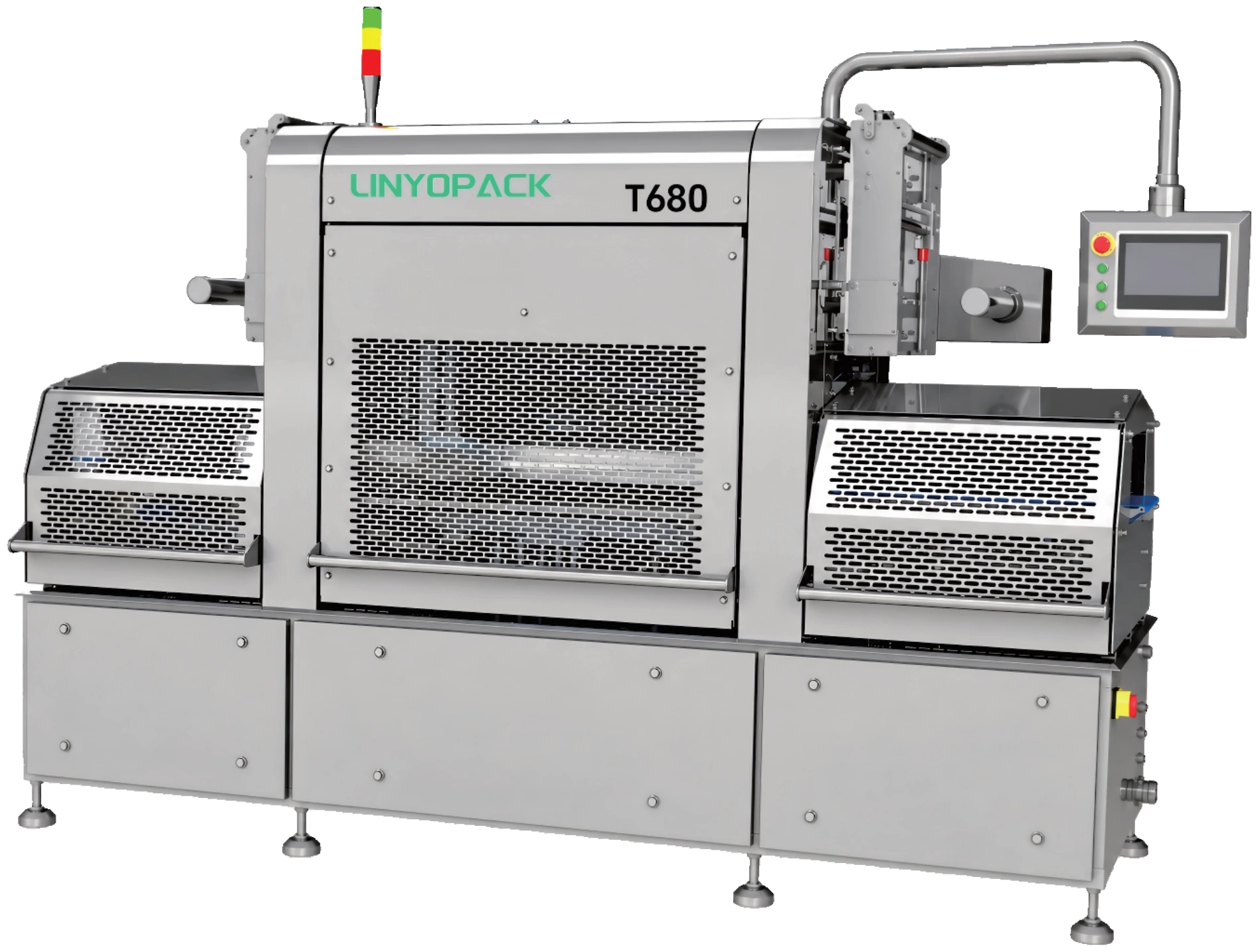
The film draws closely around the cut and seals to a compatible tray or backing board. Share the cut profile, your preferred skin film and any exposed bone. The T680 requires a modified configuration with four-cavity tooling for VSP.
Request a VSP quote
Tray sealing
A flat lidding film seals to the rim without gas exchange. Share the tray material, rim drawing and lidding film specification. Check that each loaded portion stays below the lid and clear of the rim.
Request a seal-only quote

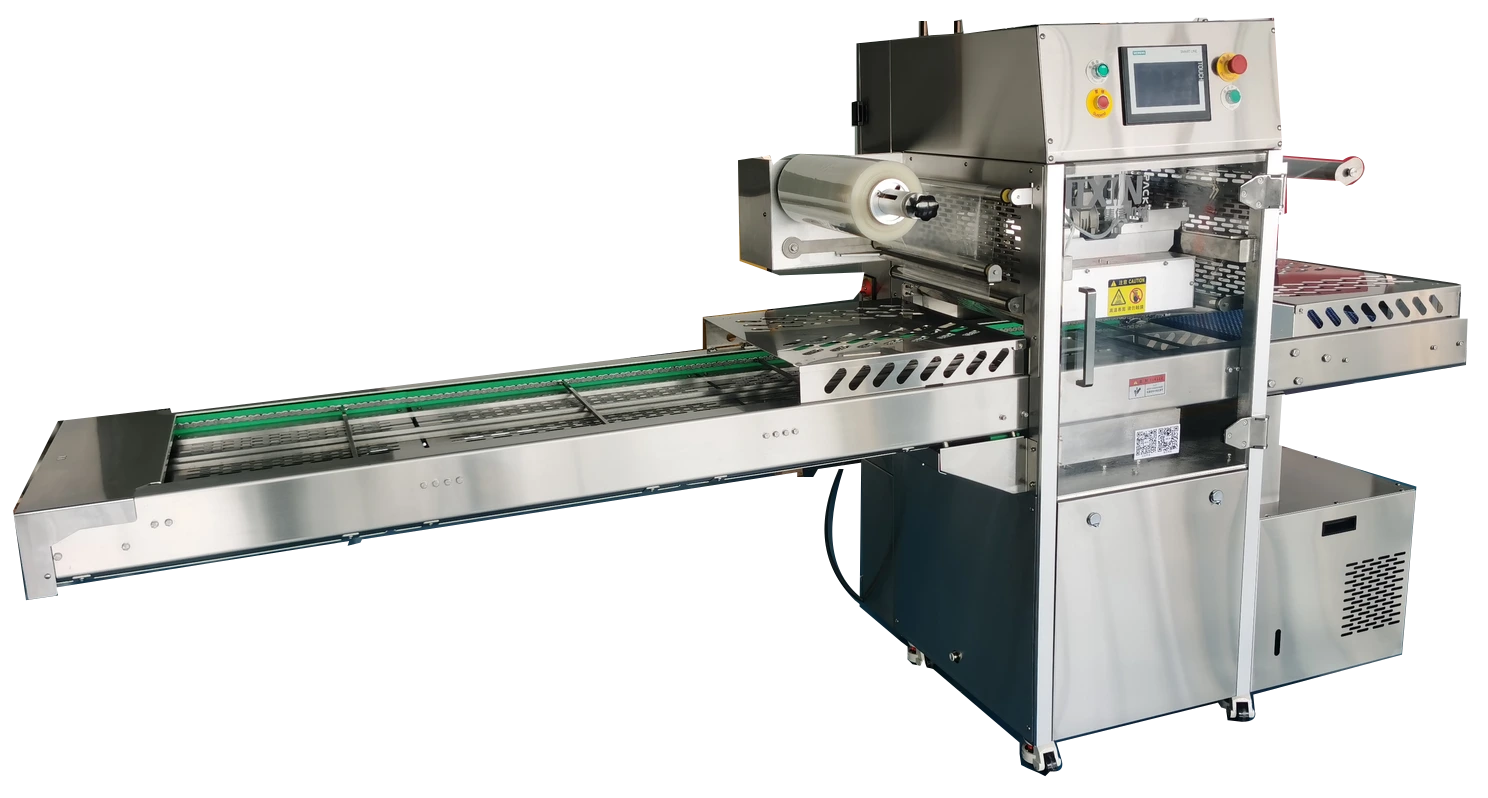
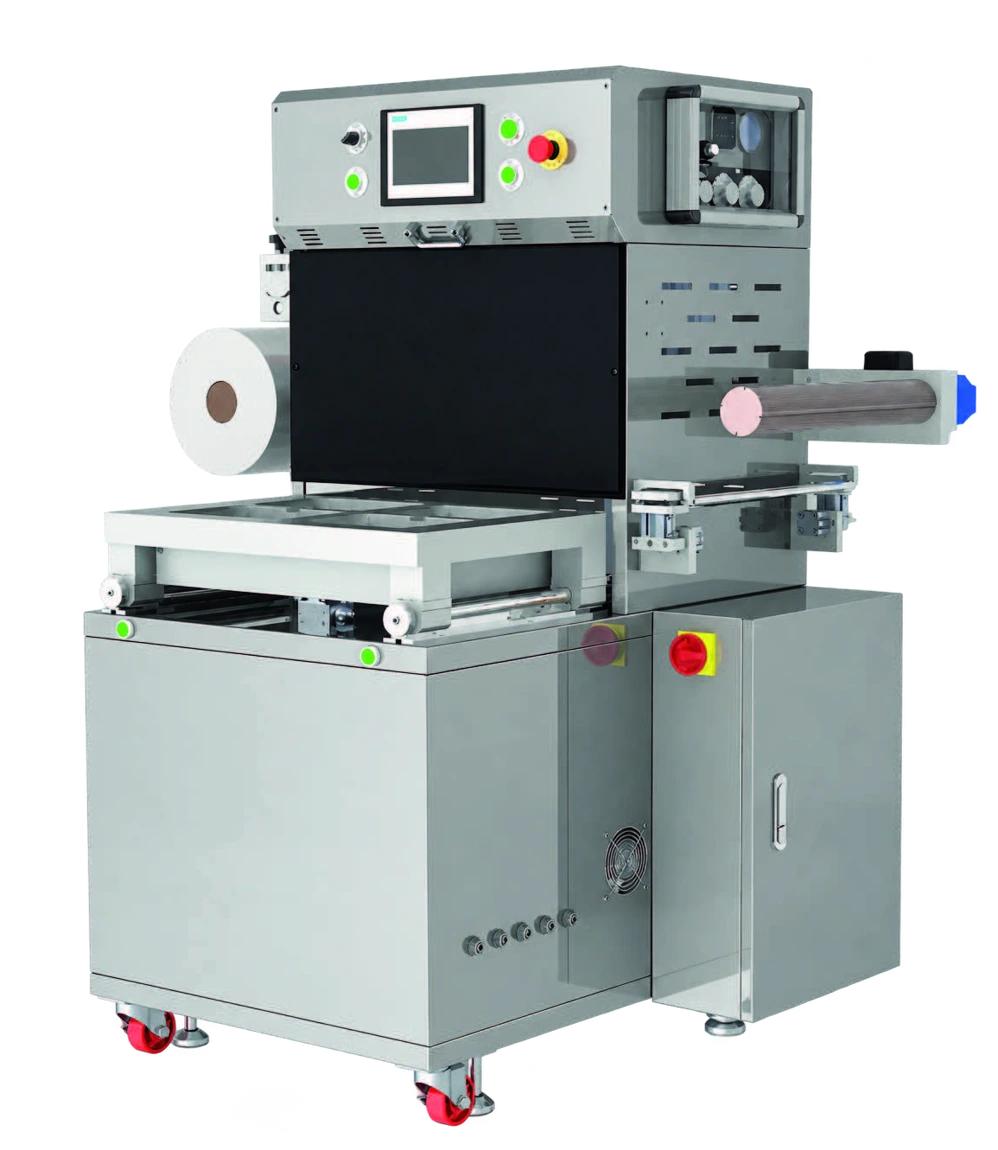
Compare LINYOPACK machines

Each model can be configured for MAP, VSP or seal-only tray sealing. For a machine quote, send your tray drawing, a side view of the filled tray and the output you need. Include how trays will arrive at the sealer and leave it after sealing.