
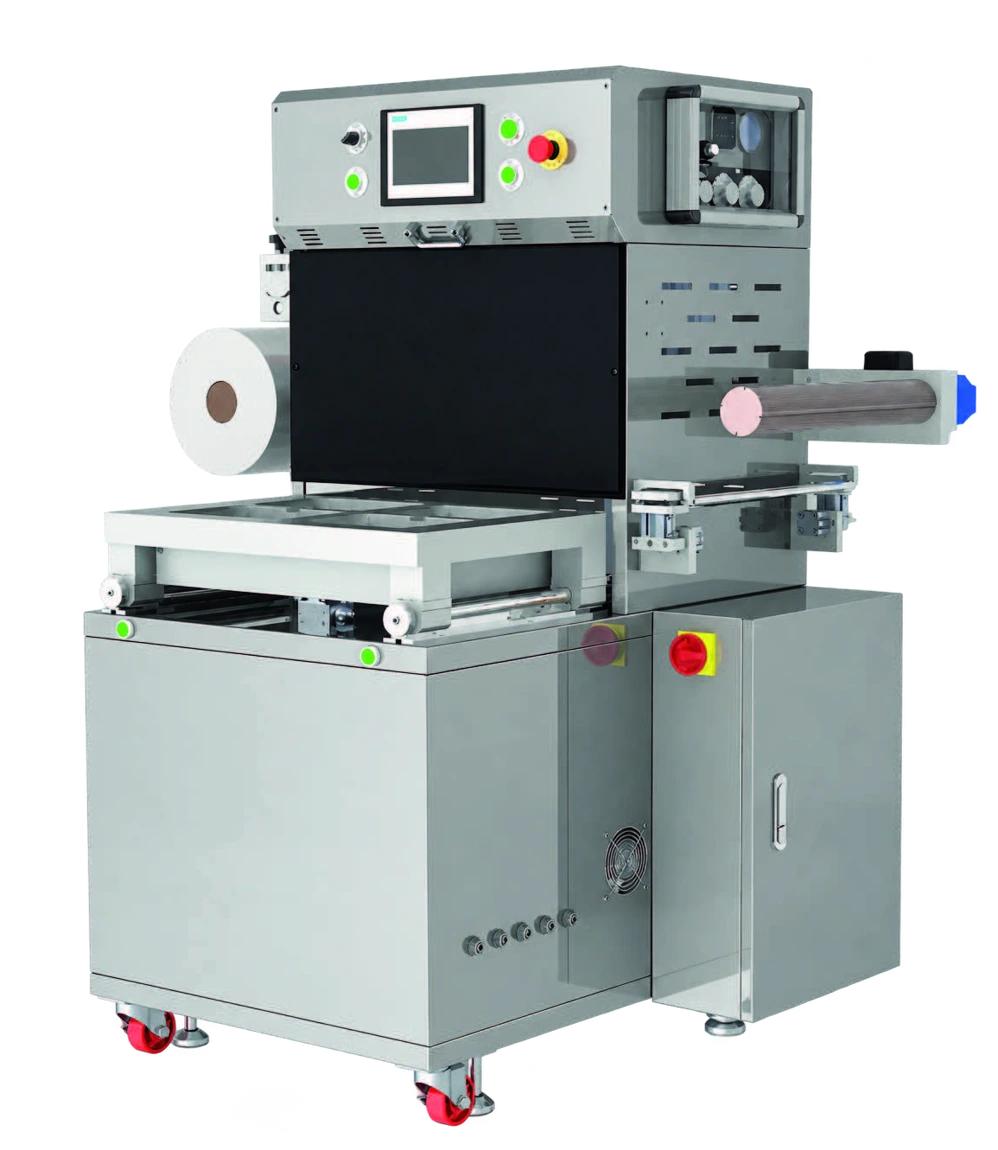
M-450
For portions placed by hand
An operator can set a drumstick down with the bone end clear of the film, then place the tray in the tool. Include a photo of the tallest portion.
Boneless breasts can lie in a single layer. Drumsticks and wings can pivot or overlap as the tray moves. Check the arrangement after loading and again at the sealing station before deciding how the trays should be fed.
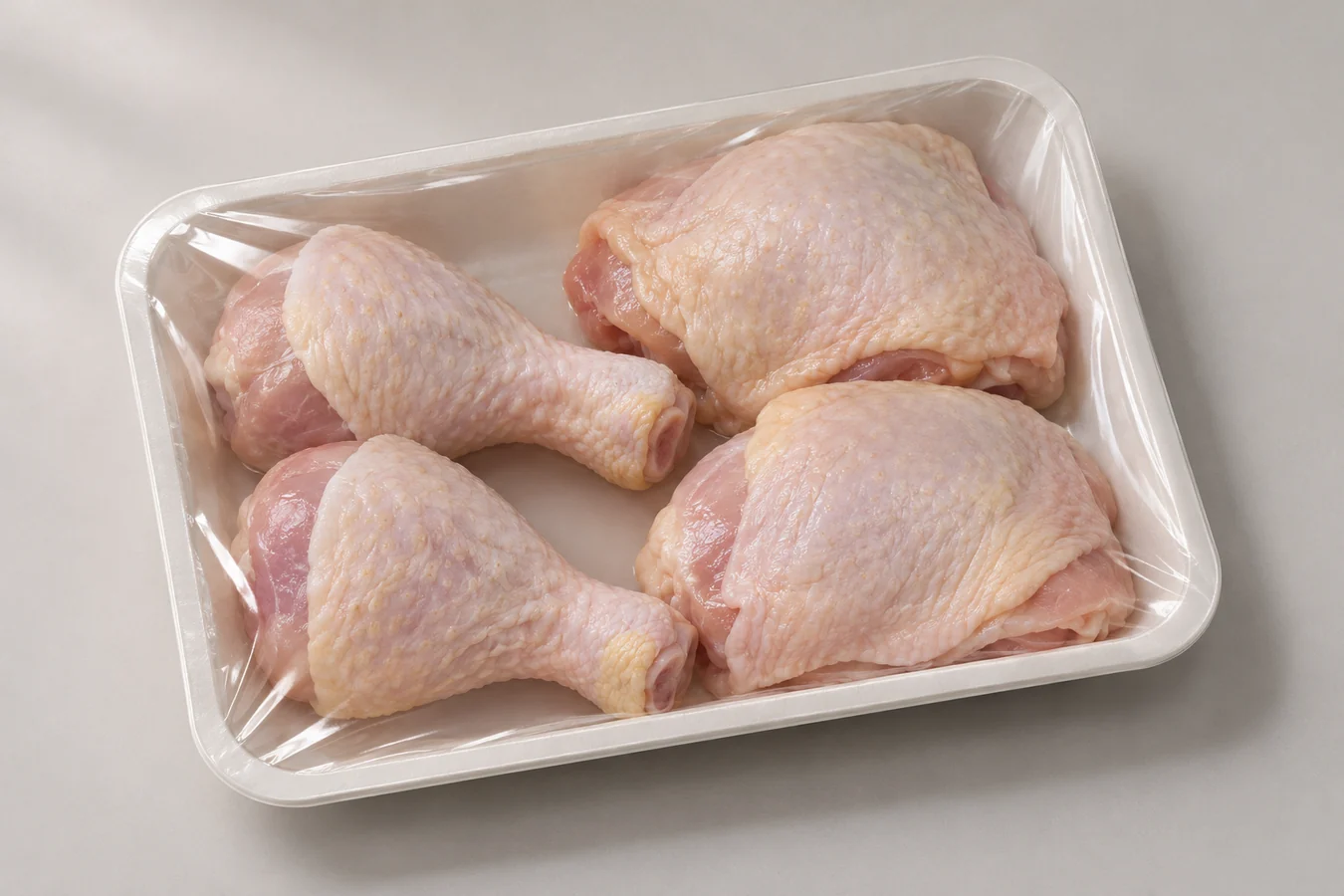
Packaging example
A pair of breast fillets may leave an even gap under the lid. A drumstick laid diagonally can bring its bone end close to a corner. For a changeover between these packs, compare the tray outline, the highest point of each portion and the number of pieces per tray.
Chicken drumsticks in modified atmosphere trays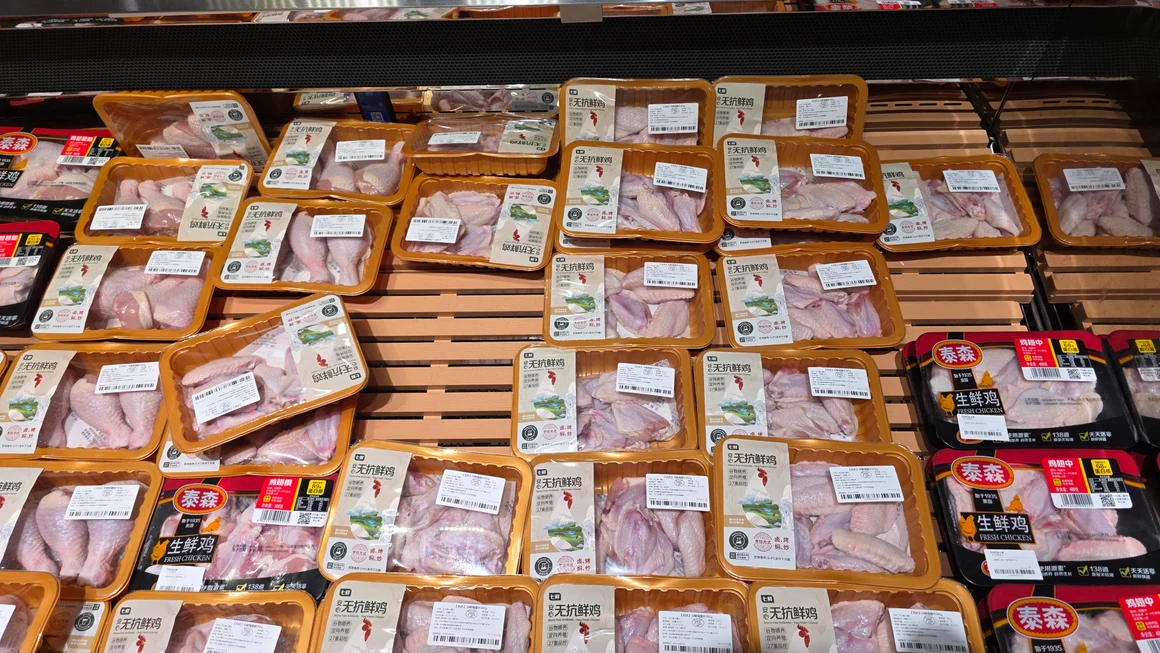
All three machines support modified atmosphere packaging, vacuum skin packaging and tray sealing without gas exchange. For a bone-in cut, check the clearance under a flat lid or the point where a skin film would stretch over the bone. Then choose how the trays will arrive.
For portions placed by hand
An operator can set a drumstick down with the bone end clear of the film, then place the tray in the tool. Include a photo of the tallest portion.
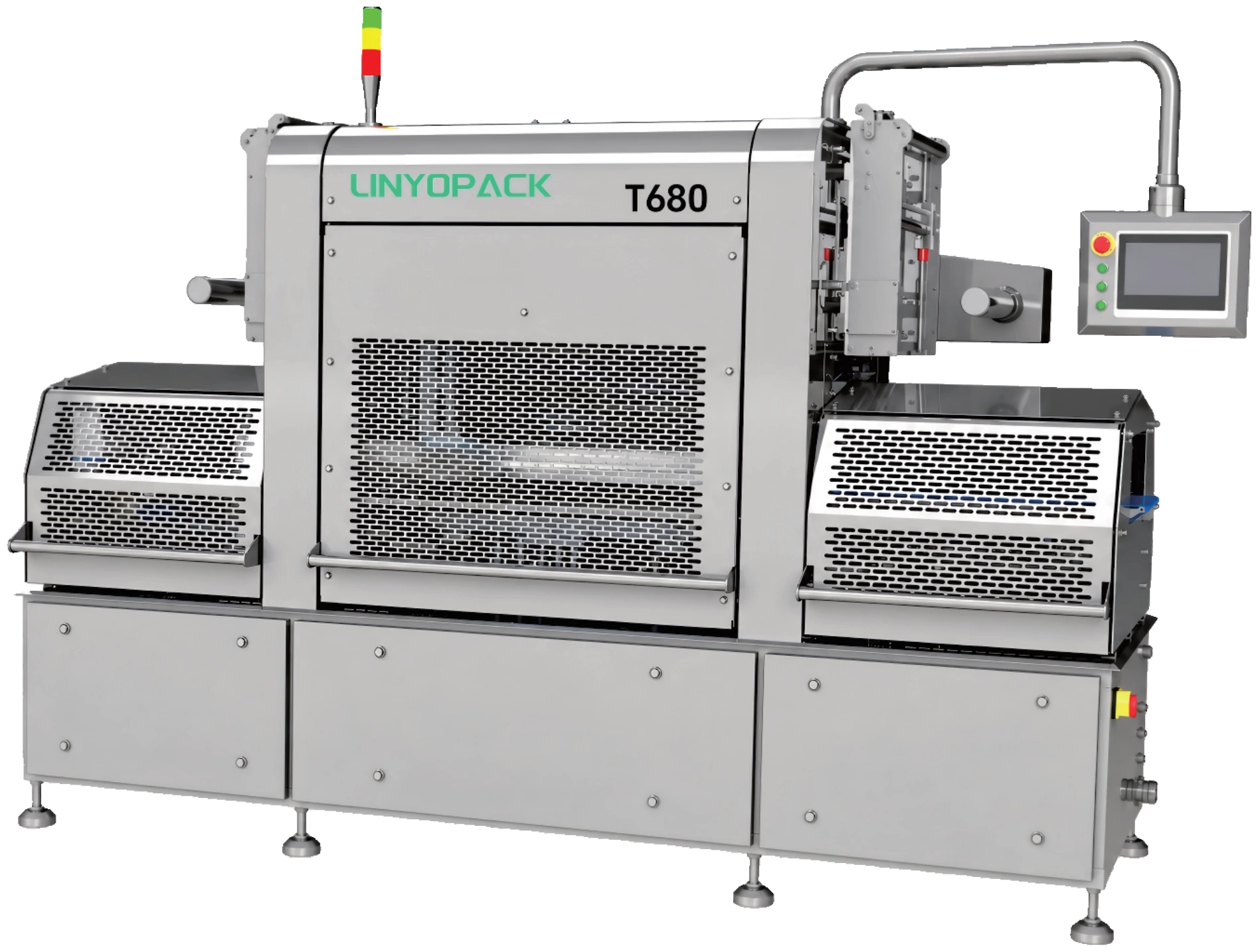
For automatic feeding from portioning
The T680 feeds and positions trays automatically. Confirm the spacing between trays and whether drumsticks stay in place during transfer.
Vacuum skin packaging
Requires a modified T680 with four-cavity tooling.
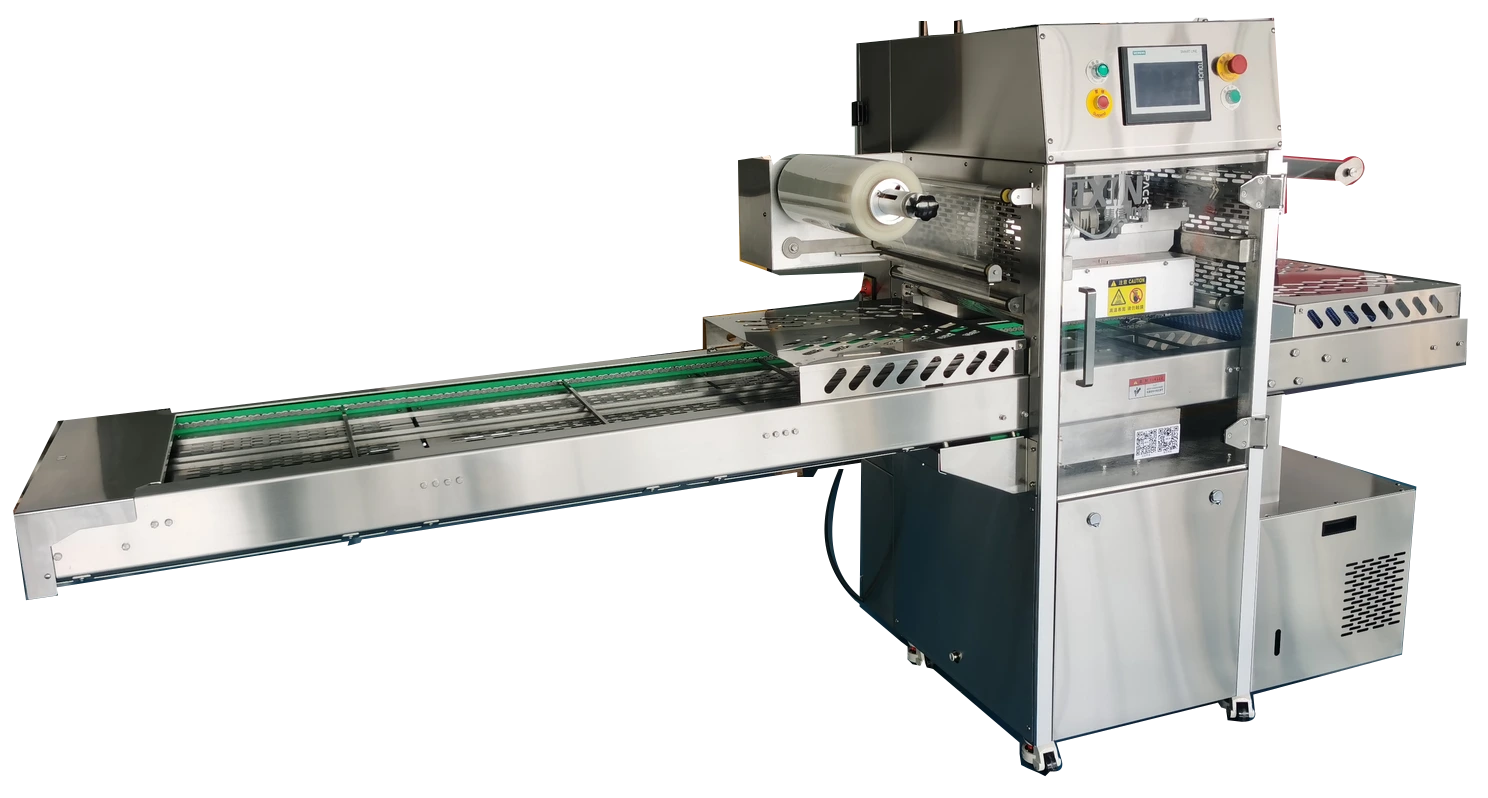
For a continuous stream of poultry trays
Check that wings and drumsticks stay inside the tray outline as successive trays enter the DZML-450 conveyor. Record the tray spacing and the position of exposed bone ends.