
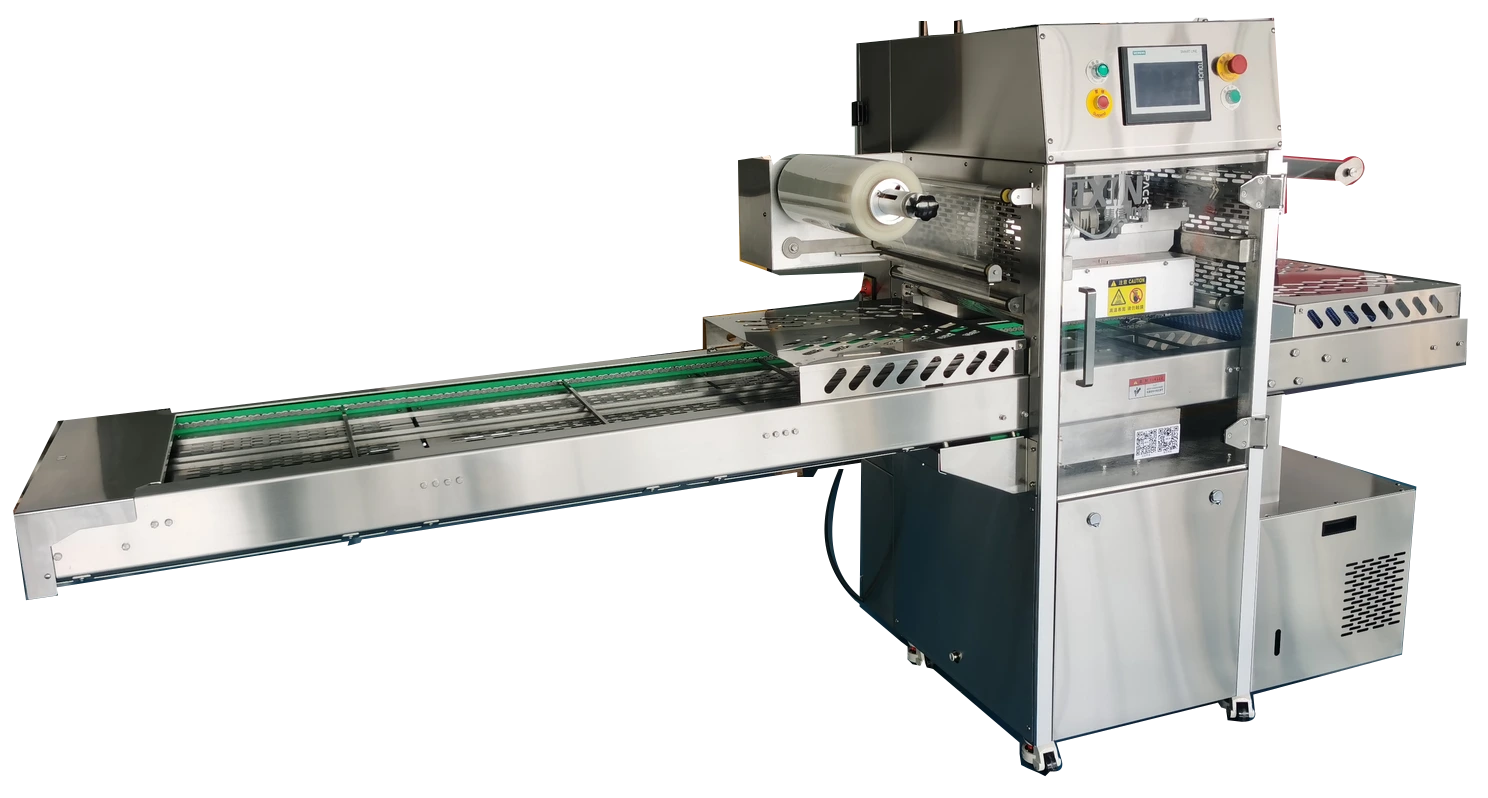
DZML-450
Continuous infeed · machine shown
The DZML-450 in the clip carries open trays into the sealing station and releases trays with printed lids. Record the tray spacing and check the film cut at the corners.
Fresh produce
One tall berry or a leaf resting on the flange can get in the way of the lidding film. The DZML-450 demonstration follows whole-fruit trays through a continuous sealing station.
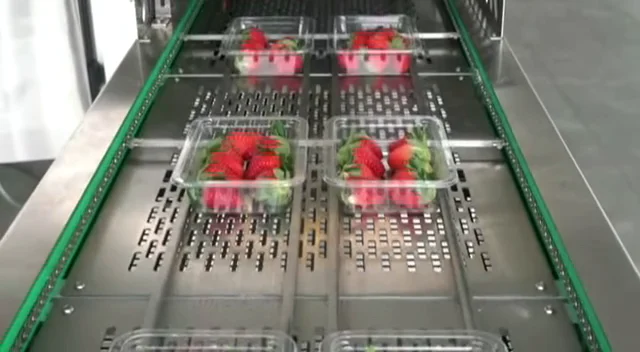
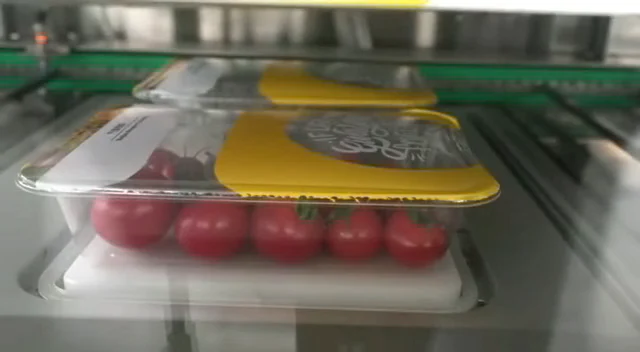
The video shows the DZML-450 sealing strawberry trays on a conveyor. For the same seal-only format, compare the three loading methods below. Keep the film clear of the tallest berry and its leaves.
Continuous infeed · machine shown
The DZML-450 in the clip carries open trays into the sealing station and releases trays with printed lids. Record the tray spacing and check the film cut at the corners.
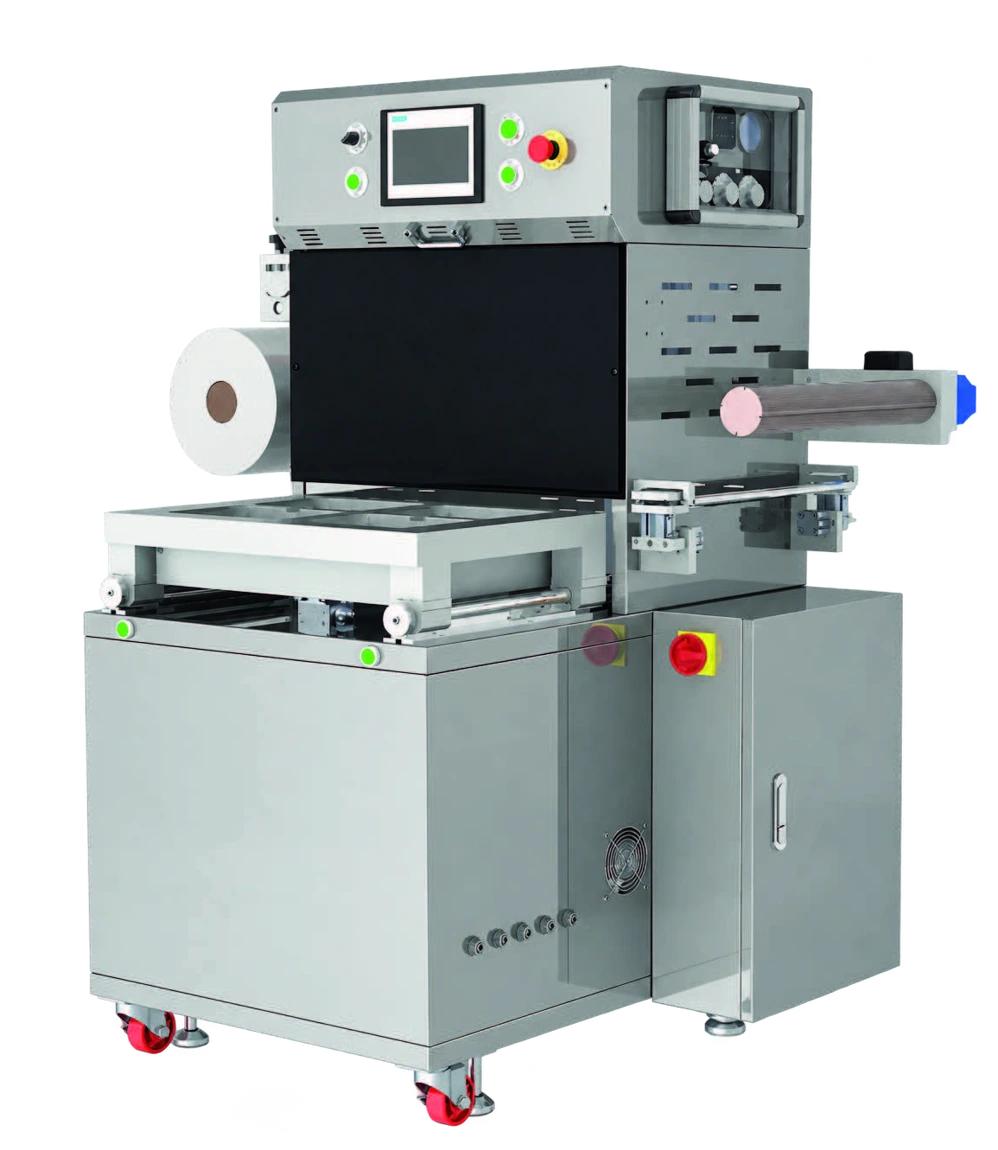
For hand-loaded berry trays
For a hand-loaded seal-only run, an operator can check the height of each tray of berries and clear leaves from the rim before loading the M-450.
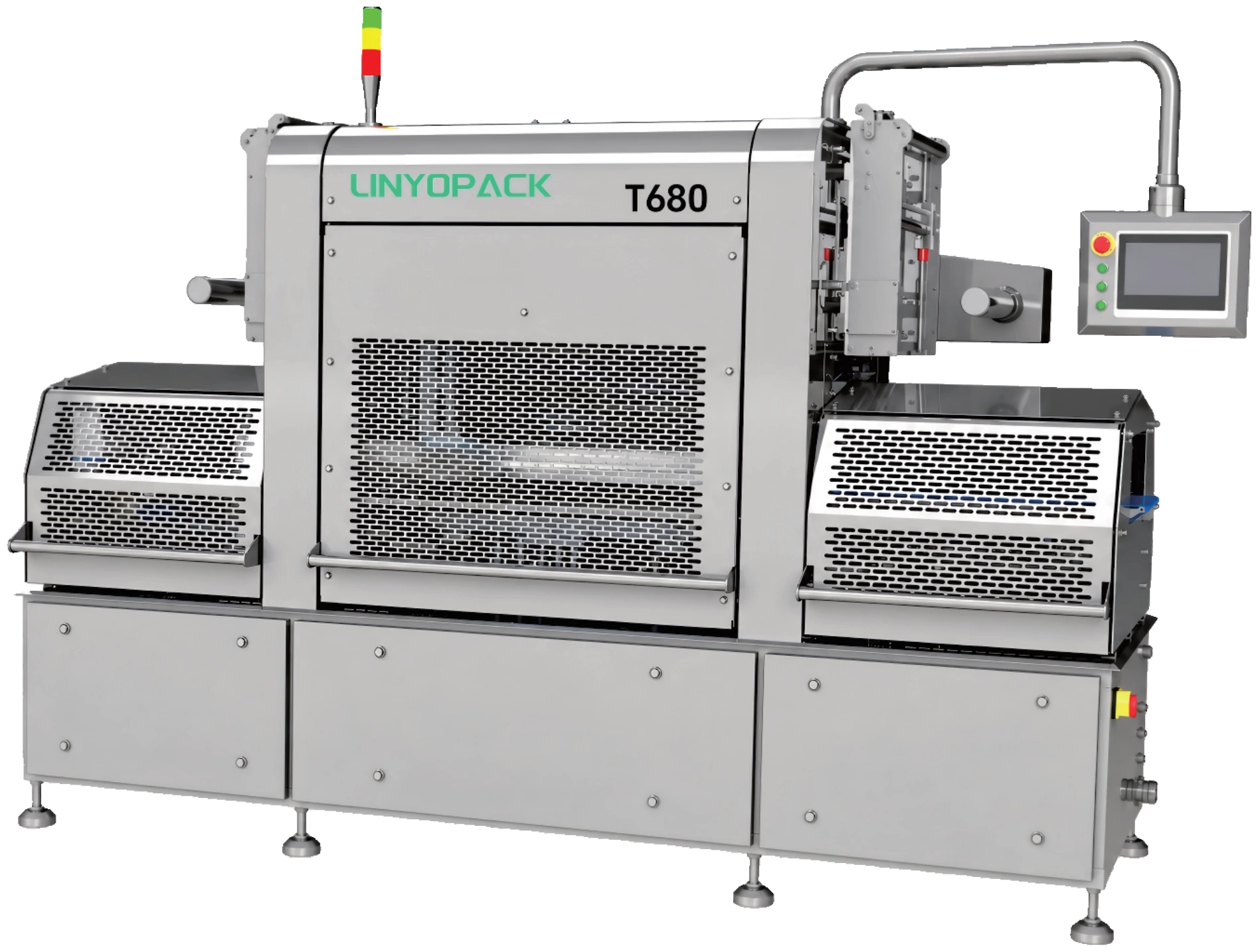
For automatically positioned berry trays
Choose the T680 when filled trays arrive from a packing line and need automatic feeding and positioning. Check whether berries shift as a tray transfers to the sealing station.