
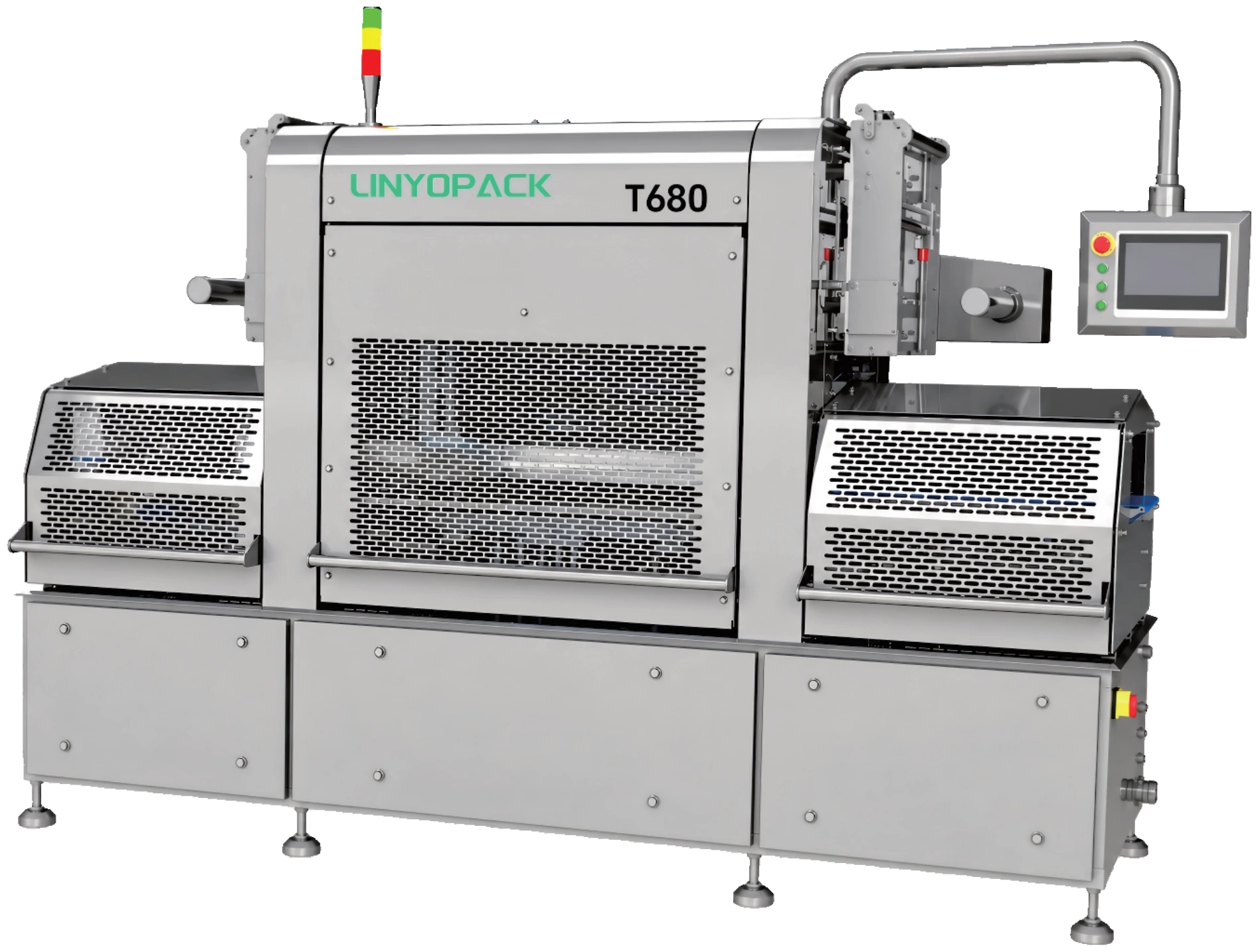
Seafood
A tapered fillet, a thick fish steak and a tray of peeled shrimp present different surfaces to the film. Start with the seafood product and its approved packaging process, then match the tray, film and tooling.
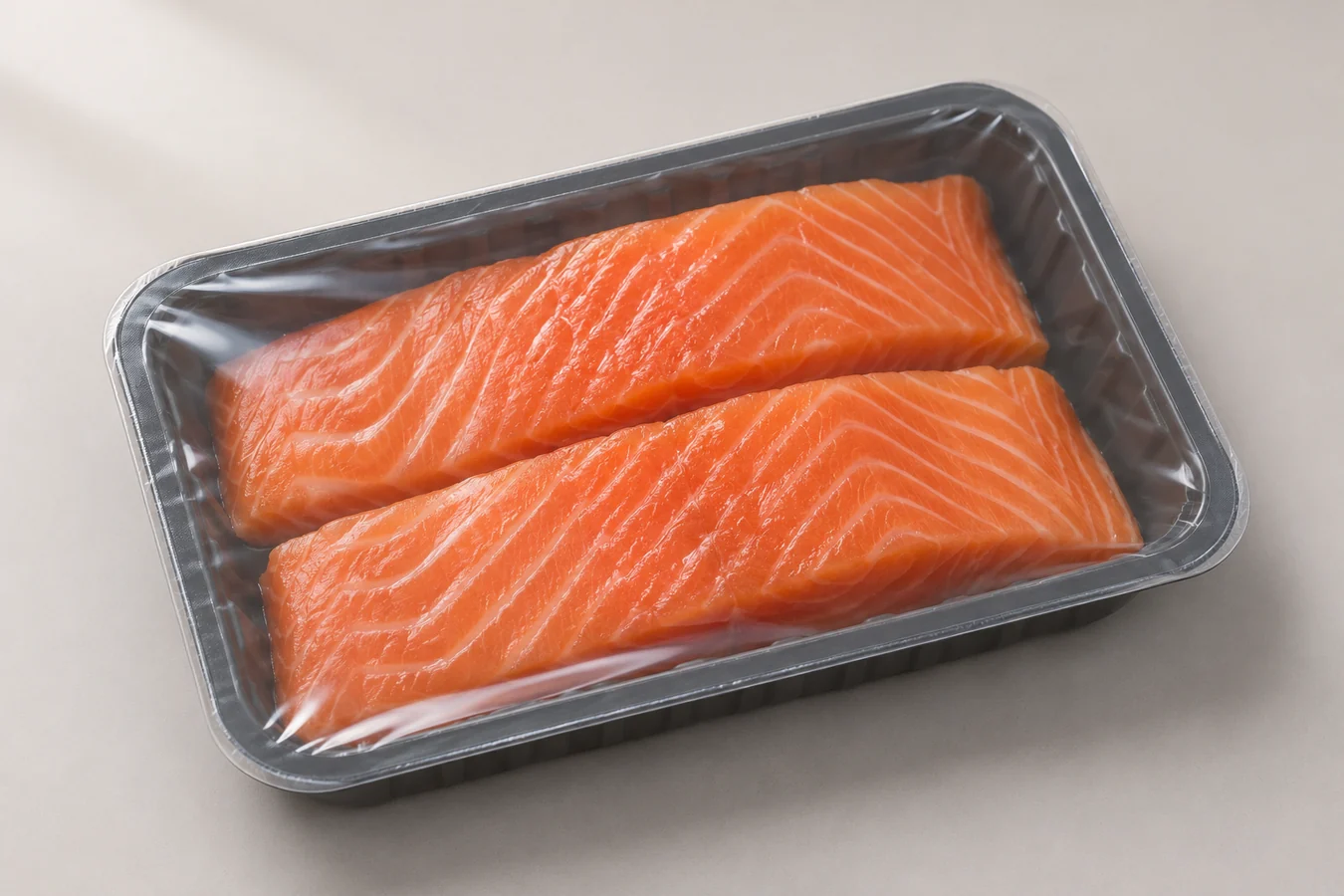
Packaging example
A fish steak and a fillet portion
A fish steak has a pronounced high point. A long fillet may sit diagonally, bringing its thin tail close to the flange. A top view shows the footprint, while a side view shows where the lid could touch the portion.
Salmon portions in film-lidded trays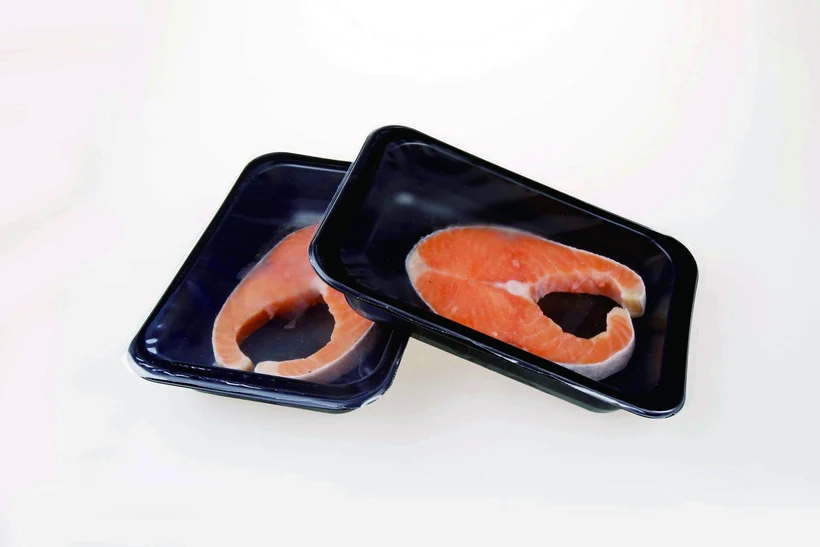
What the packed portion should show
- Skin-on fillets
- Measure the thickest part of the fillet in its selling position. On a flat-lidded tray, check the clearance above that point and keep the tail inside the sealing rim.
- Shell-on prawns
- For a vacuum skin pack, lay out a full portion as it will be sold. Check whether shells or antennae could puncture the film, and whether the film reaches the tray between pieces. Give the film supplier the shell profile and maximum packed height.
- Liquid during transfer
- Note whether the pack contains drained portions, free liquid or an absorbent pad. Check the corners and flange after a filled tray moves into position.
- Product and film specification
- Provide the seafood species, product state, film specification and the packaging process approved for that product. Match tooling to the filled tray drawing.
Choose a machine for seafood trays
Start with the packaging specification for the species and product state. Each machine supports modified atmosphere packaging, vacuum skin packaging and tray sealing without gas exchange. The shape of the portion and the way it moves during loading help determine the tooling.
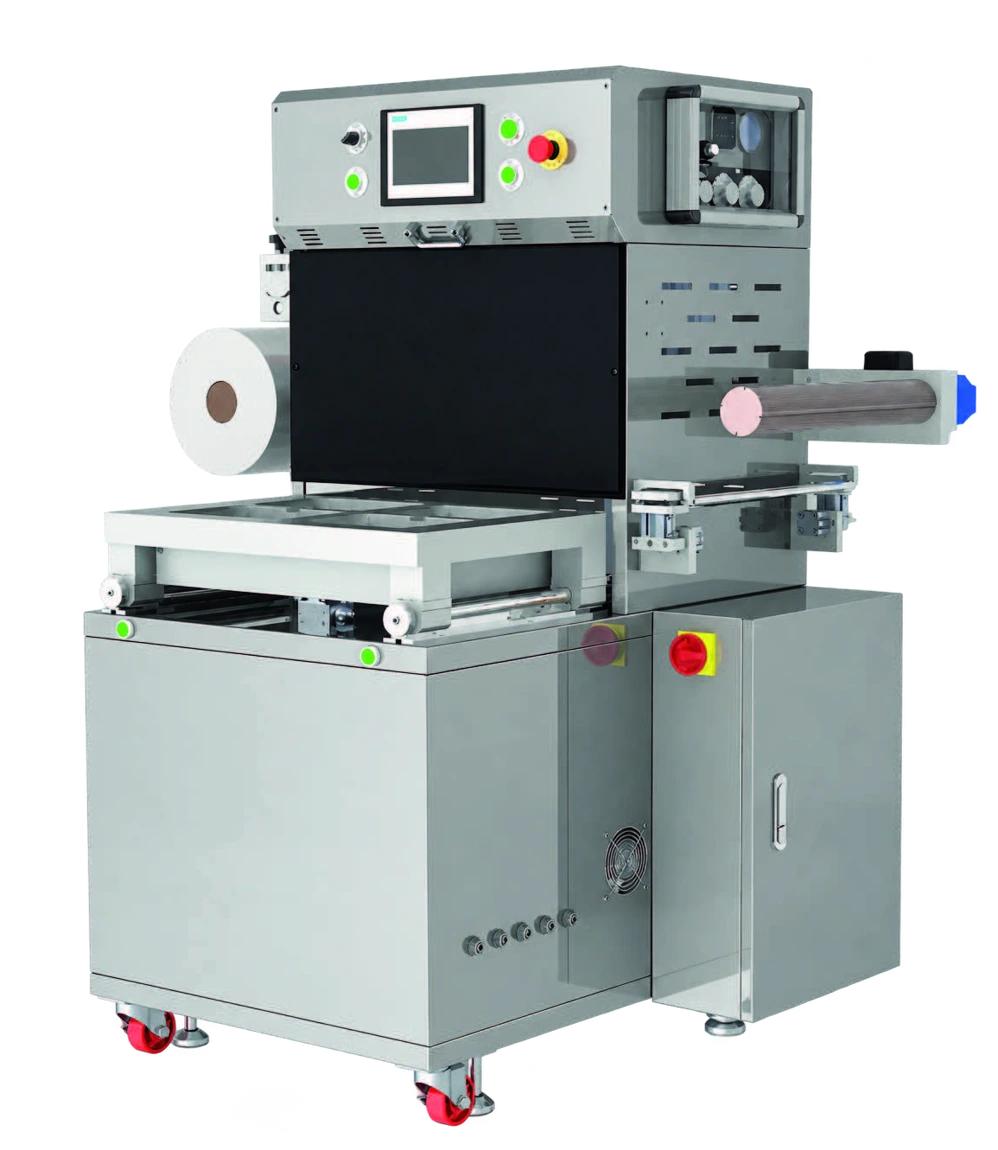
M-450
For delicate portions placed by hand
An operator can straighten a fillet and check that its tail clears the rim before placing the tray in the M-450. Include the tray drawing and the film specified for that product.
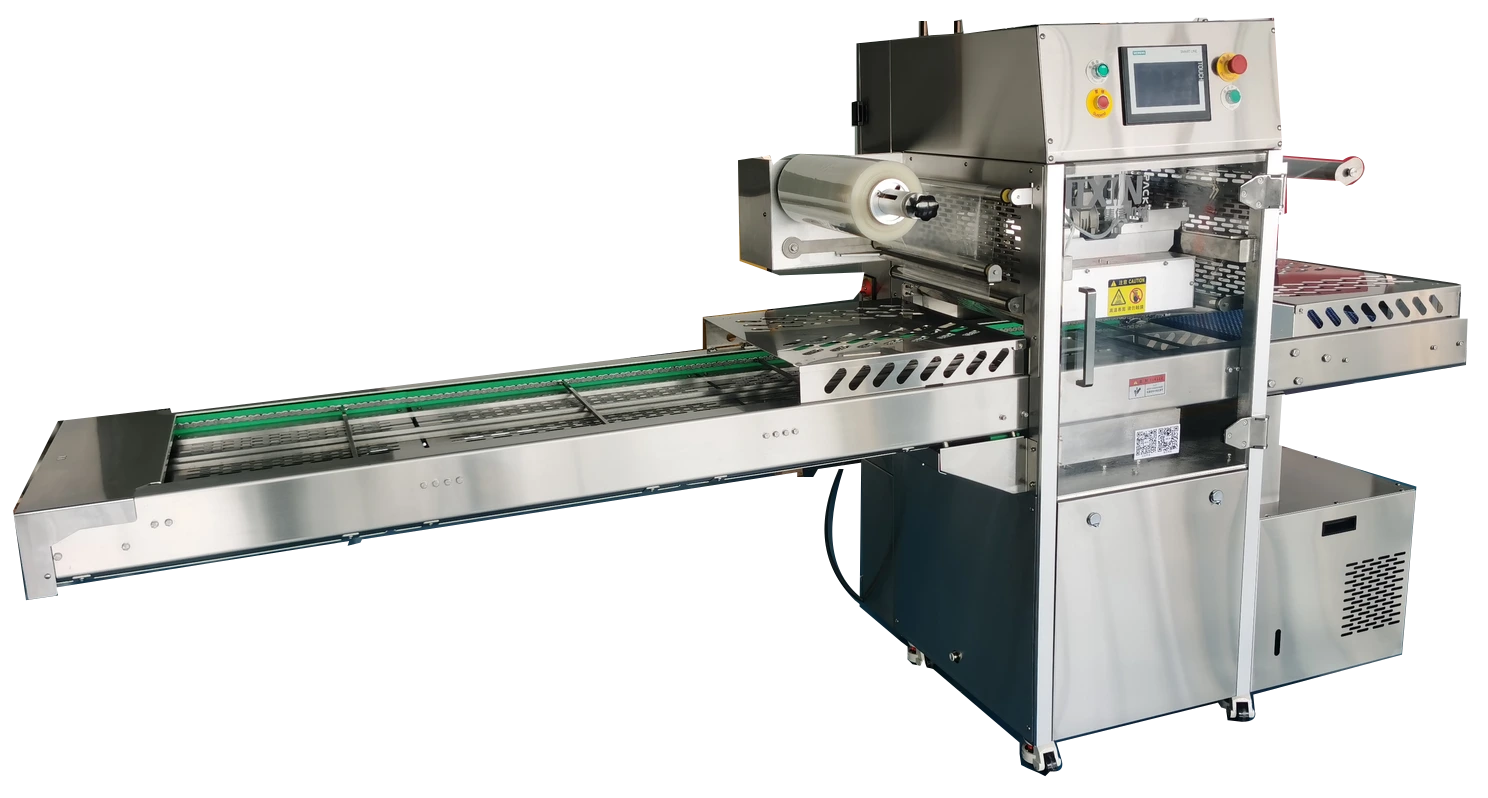
DZML-450
For conveyor-fed seafood portions
With the DZML-450, check how drained fish or shrimp sits in the tray during transfer. Record the spacing between trays and whether free liquid reaches a corner of the flange.