
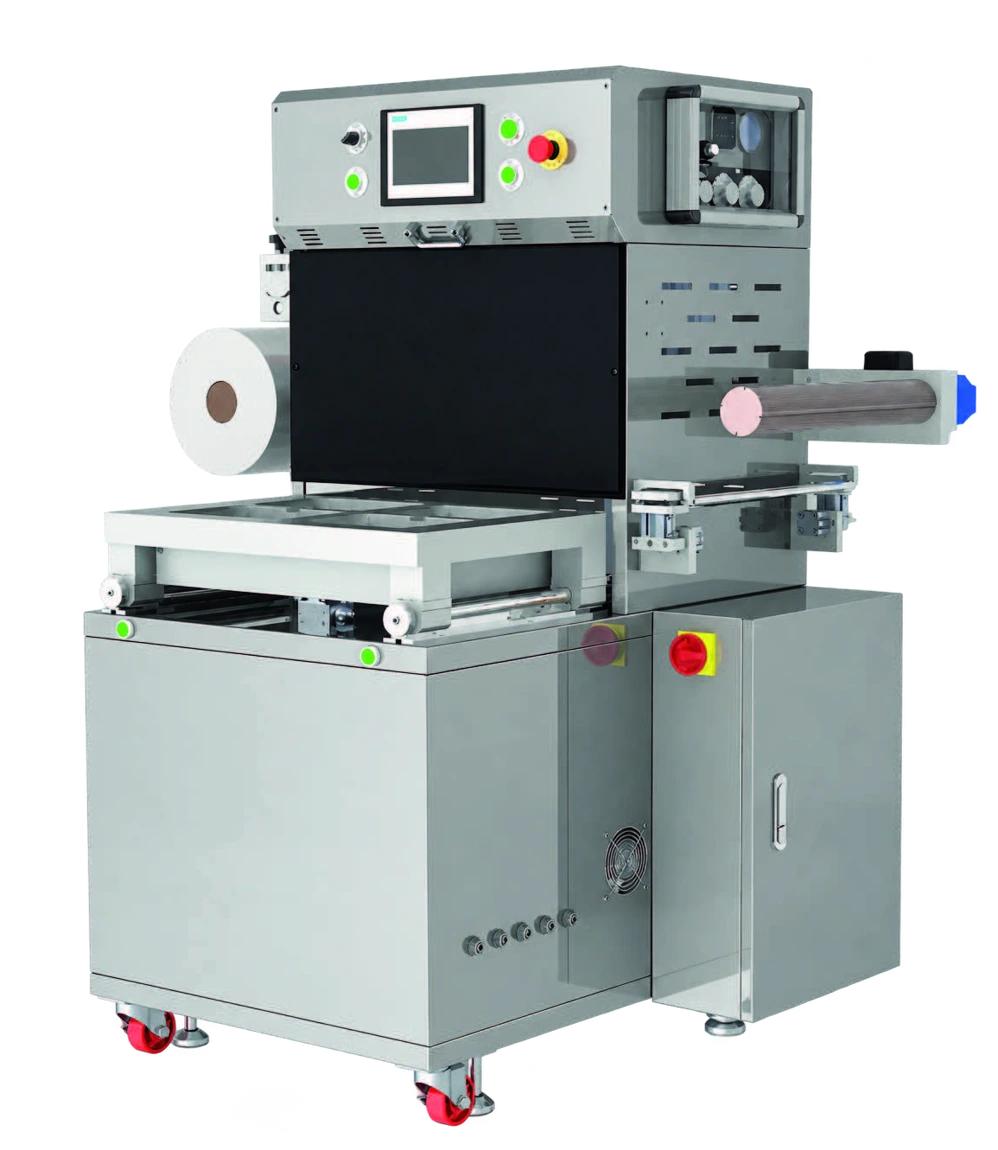
M-450
Hand loading for delicate fillets
The operator can lay the tail flat and inspect the sealing edge before placing the tray in the M-450. Include the filled weight and tray dimensions for the tool.
For a salmon pack specified with a heat-sealed lid, the machine bonds the lidding film to the flange of a preformed tray. This seal-only process leaves the air in the tray in place. Start with the thick end of the fillet and the narrow tail nearest the rim.
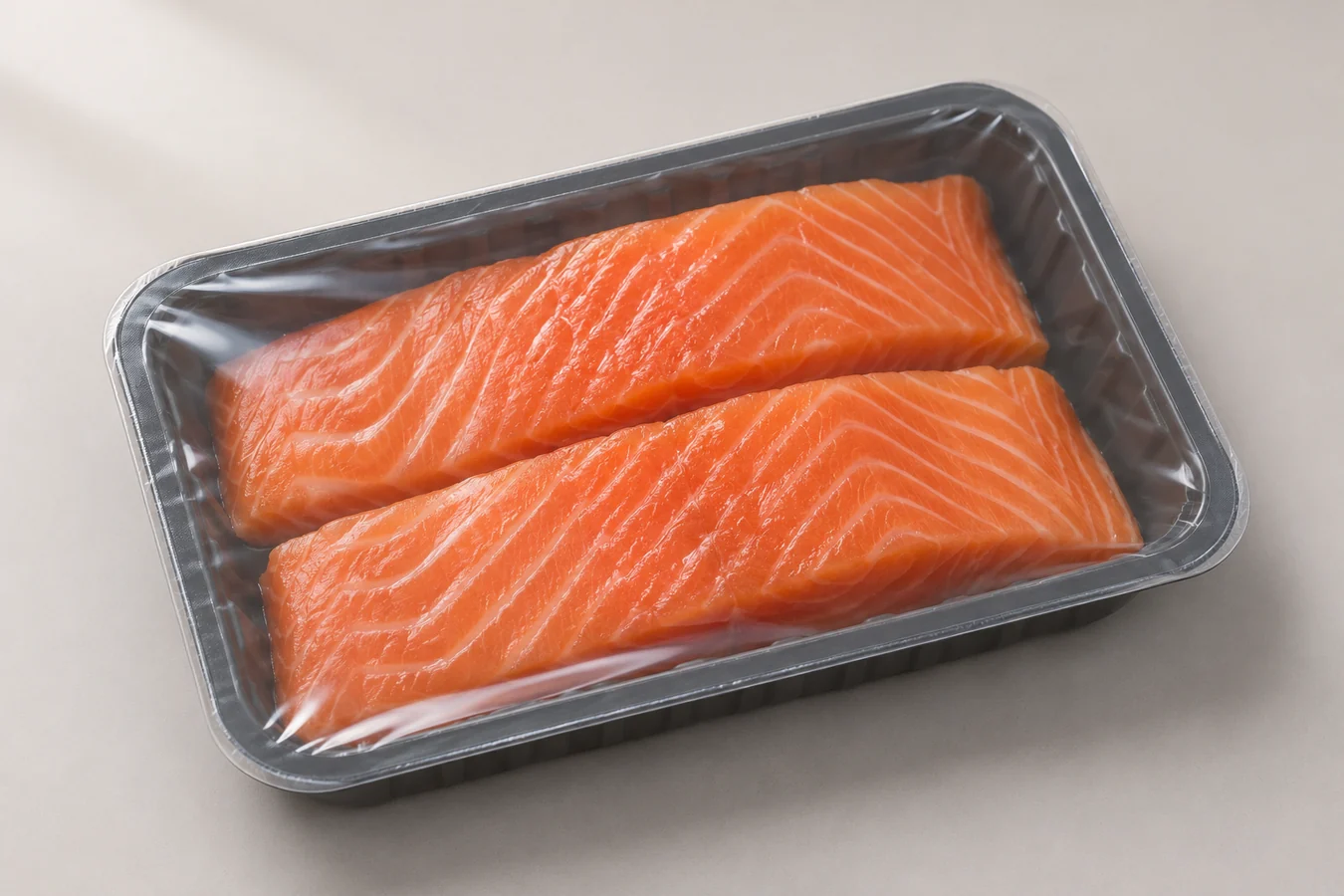
Packaging example
Place two fillet portions side by side in the intended retail position. Sight across the rim to check the clearance over the thicker ends. Then look down into the corners and check where the narrow tails sit. Transfer the tray as it would move on the line and check whether a tail slides over the flange or liquid collects on the sealing surface.
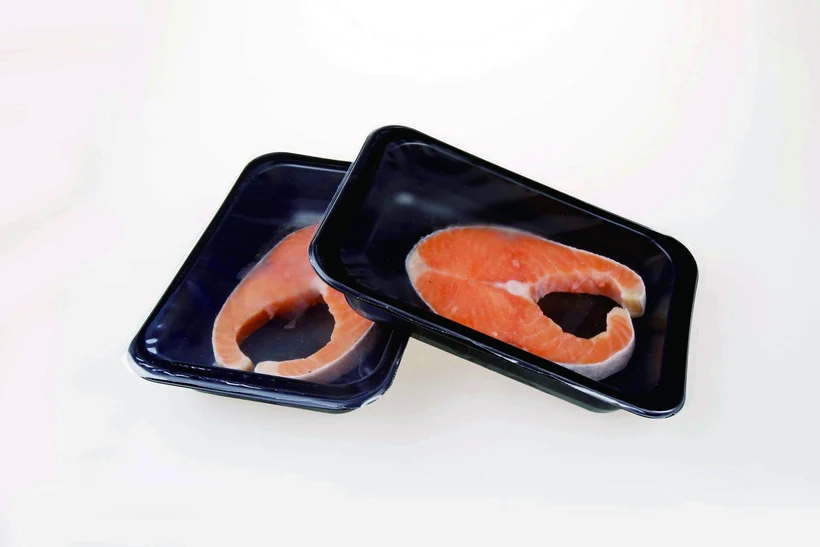
Give the required packs per hour for each tray size and how the fish portioning station hands packs to the sealer. Those details help match the sealing tool and conveyor arrangement to the line.
Hand loading for delicate fillets
The operator can lay the tail flat and inspect the sealing edge before placing the tray in the M-450. Include the filled weight and tray dimensions for the tool.
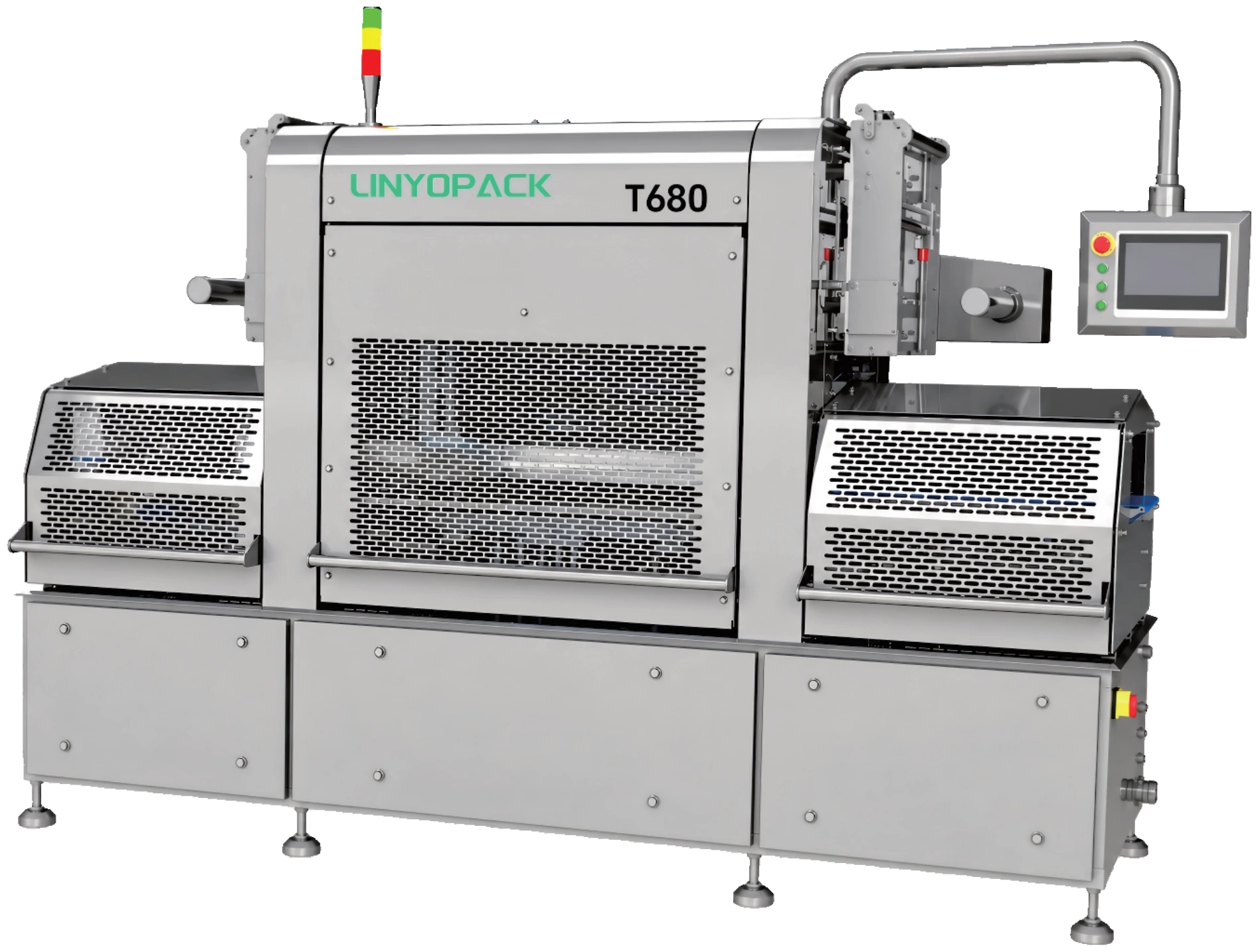
Automatic positioning from an upstream line
For the T680, specify the tray orientation at handover. Check whether the thick end of the fillet shifts as the tray moves into sealing position.
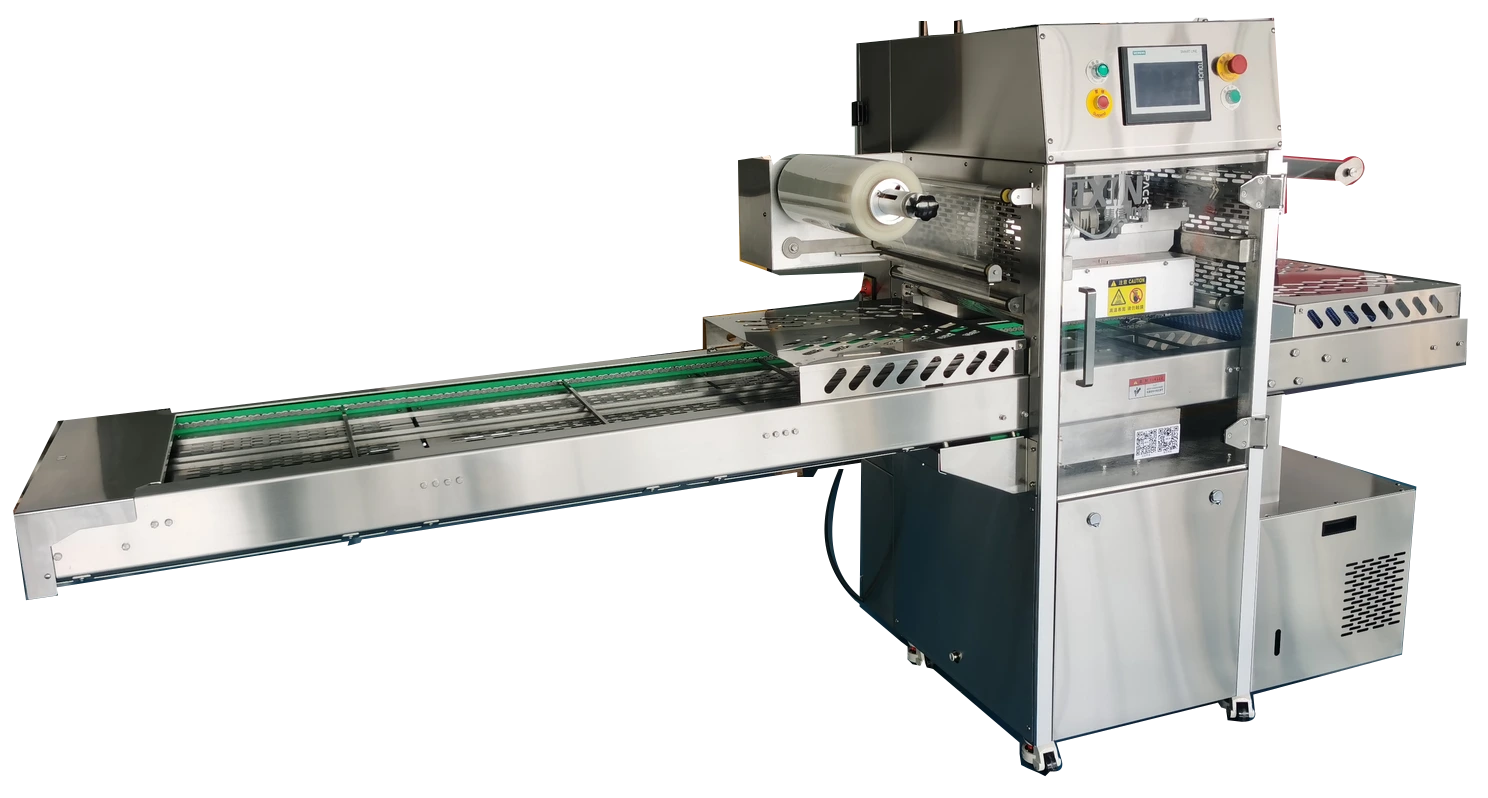
Continuous infeed and discharge
The DZML-450 feeds trays through lidding and film cutting. Share the tray spacing at infeed and the corner profile so the tool and film cut can be checked for this salmon tray.