
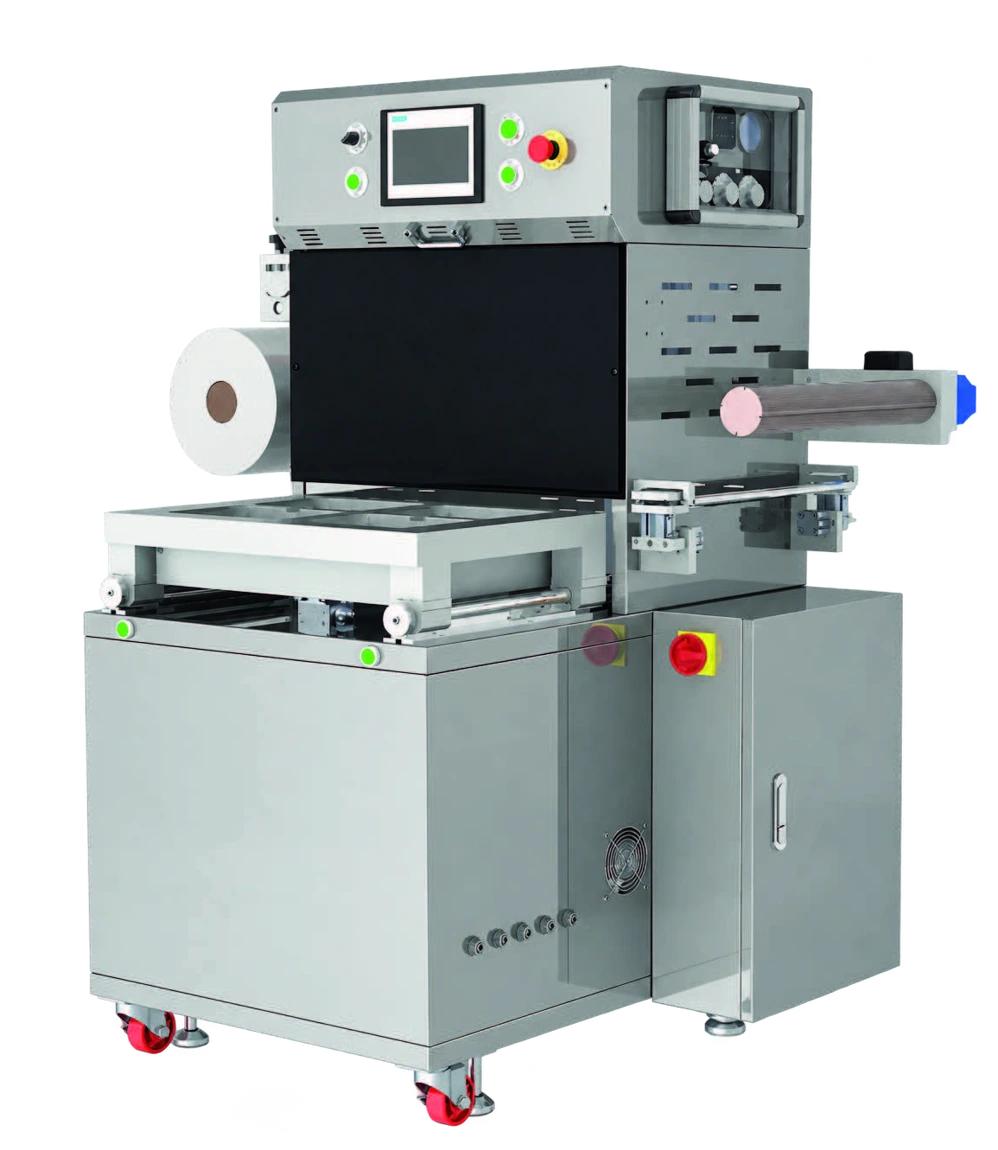
M-450
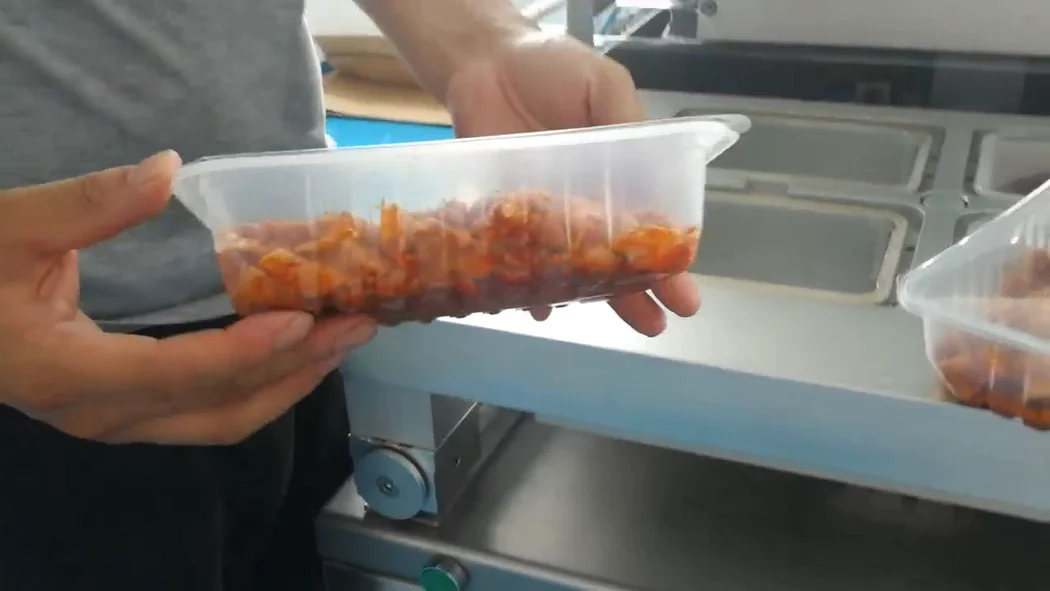
For smaller batches of hand-loaded meals
The M-450 uses a vacuum and gas-fill cycle for modified atmosphere packaging. Confirm whether the proposed tool supports the meal tray and its internal ribs.
A dry noodle portion, a sauced dish and a divided meal tray place different demands on the lid. The order in which ingredients are added can determine whether sauce or pieces of food reach the sealing edge.
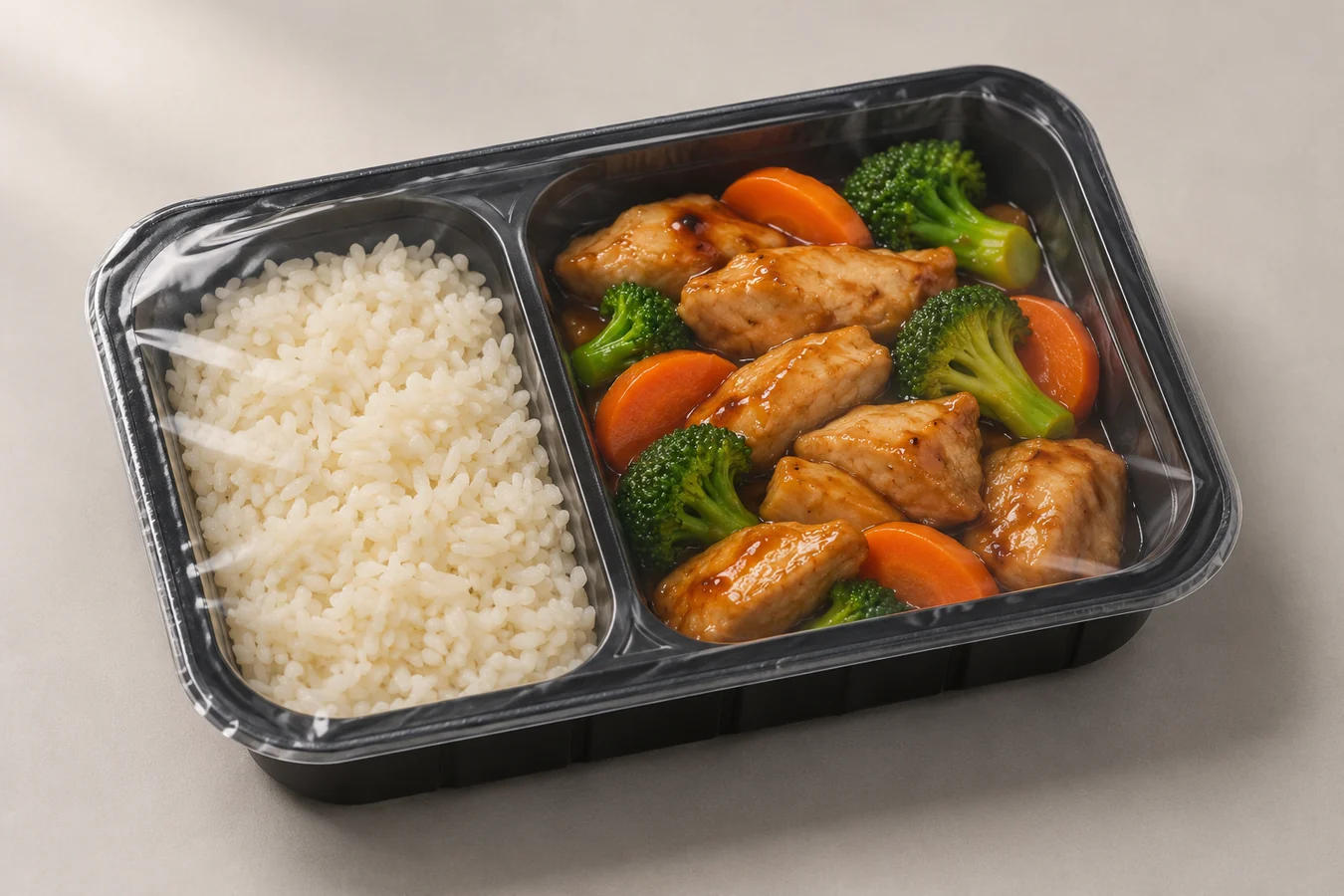
Packaging example
Consider a tray filled with a main dish and a separate sauce portion. Record the fill level in each compartment and whether the dividing rib must seal to the lid. Then check what happens when the filled tray is moved from portioning to the sealer.
Compartment ready meals in modified atmosphere trays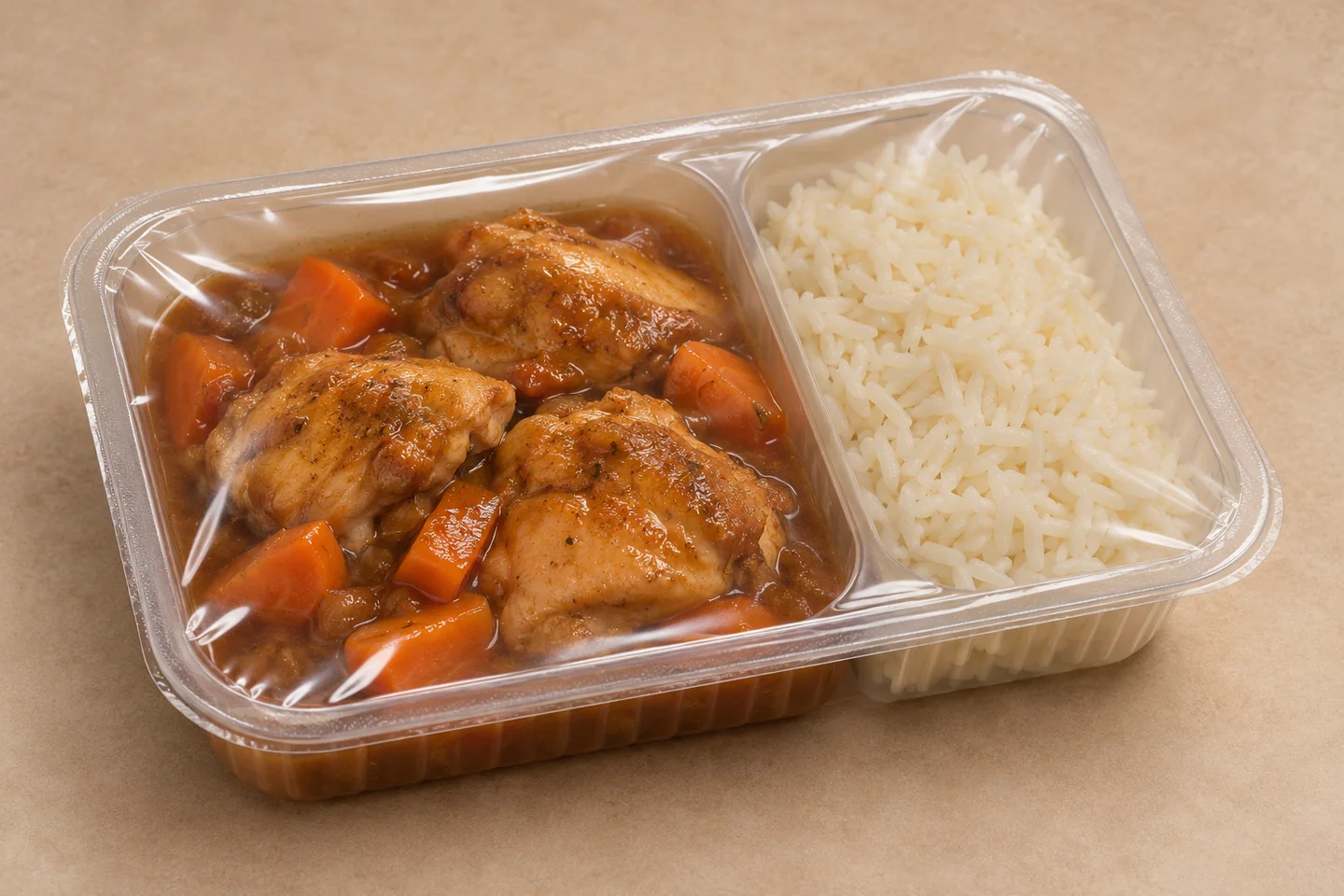
All three machines support modified atmosphere packaging, vacuum skin packaging and tray sealing without gas exchange. Decide whether the meal needs clearance under a flat lid or can take close film contact. Then compare how the filled tray reaches the sealing tool.
For smaller batches of hand-loaded meals
The M-450 uses a vacuum and gas-fill cycle for modified atmosphere packaging. Confirm whether the proposed tool supports the meal tray and its internal ribs.
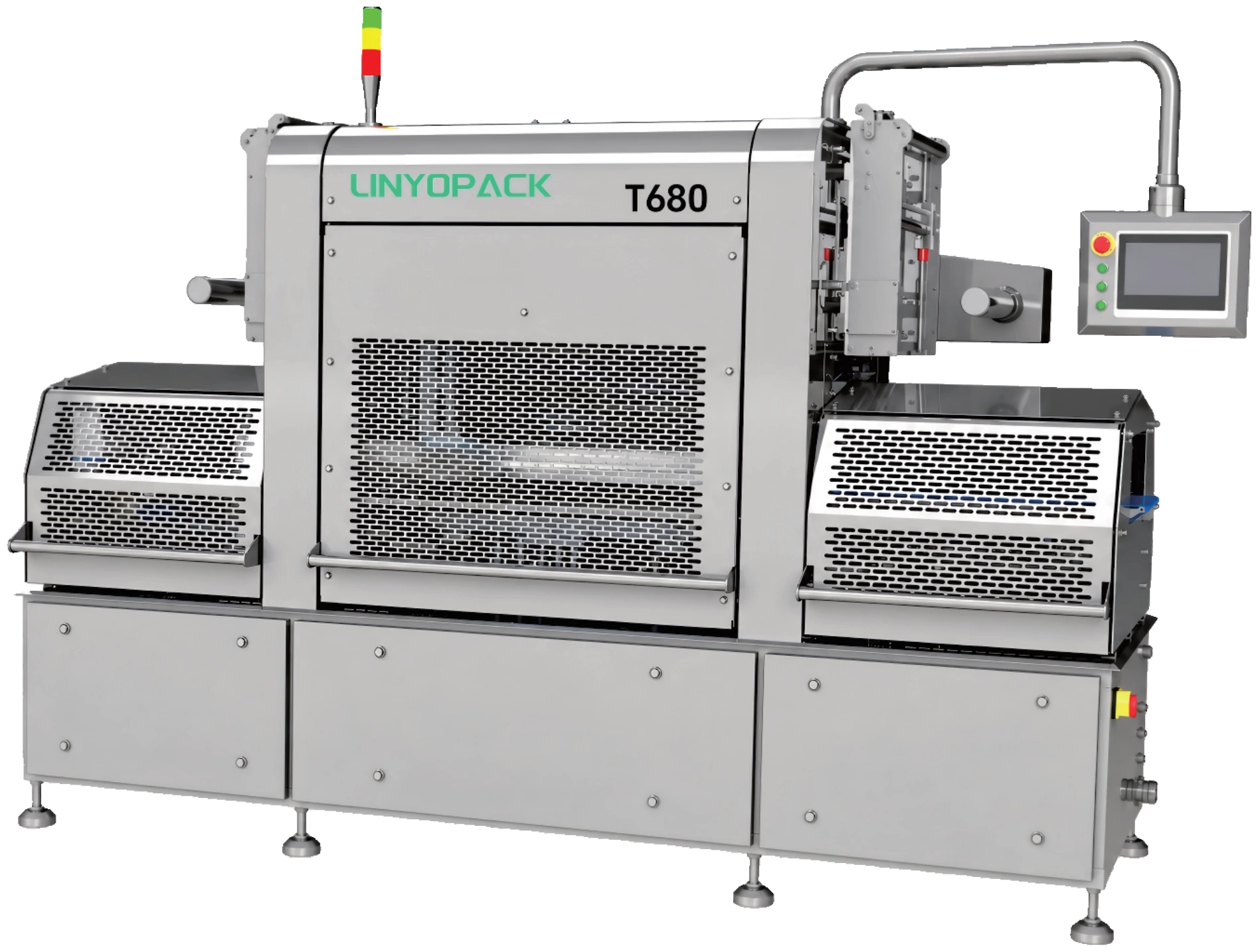
For automatic feeding from the filling line
The T680 feeds and positions trays automatically. Share the tray layout and the transfer from the filling station so sauce movement and sealing clearance can be reviewed.
Vacuum skin packaging
Requires a modified T680 with four-cavity tooling.
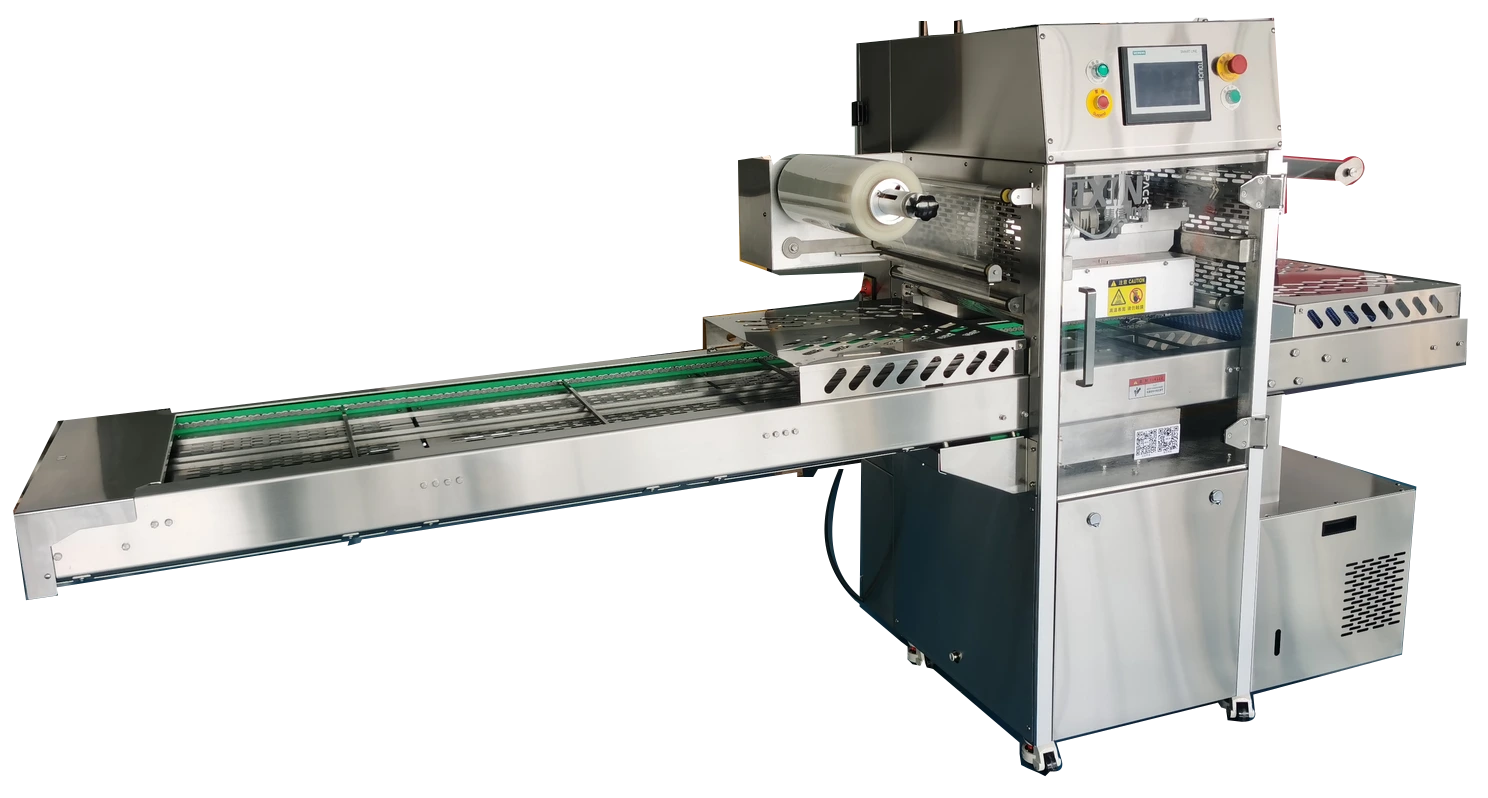
For trays arriving on a continuous conveyor
Check the spacing and stability of filled trays as they enter the DZML-450. For divided meals, specify which internal ribs must meet the film and check that sauce stays clear of them during transfer.