
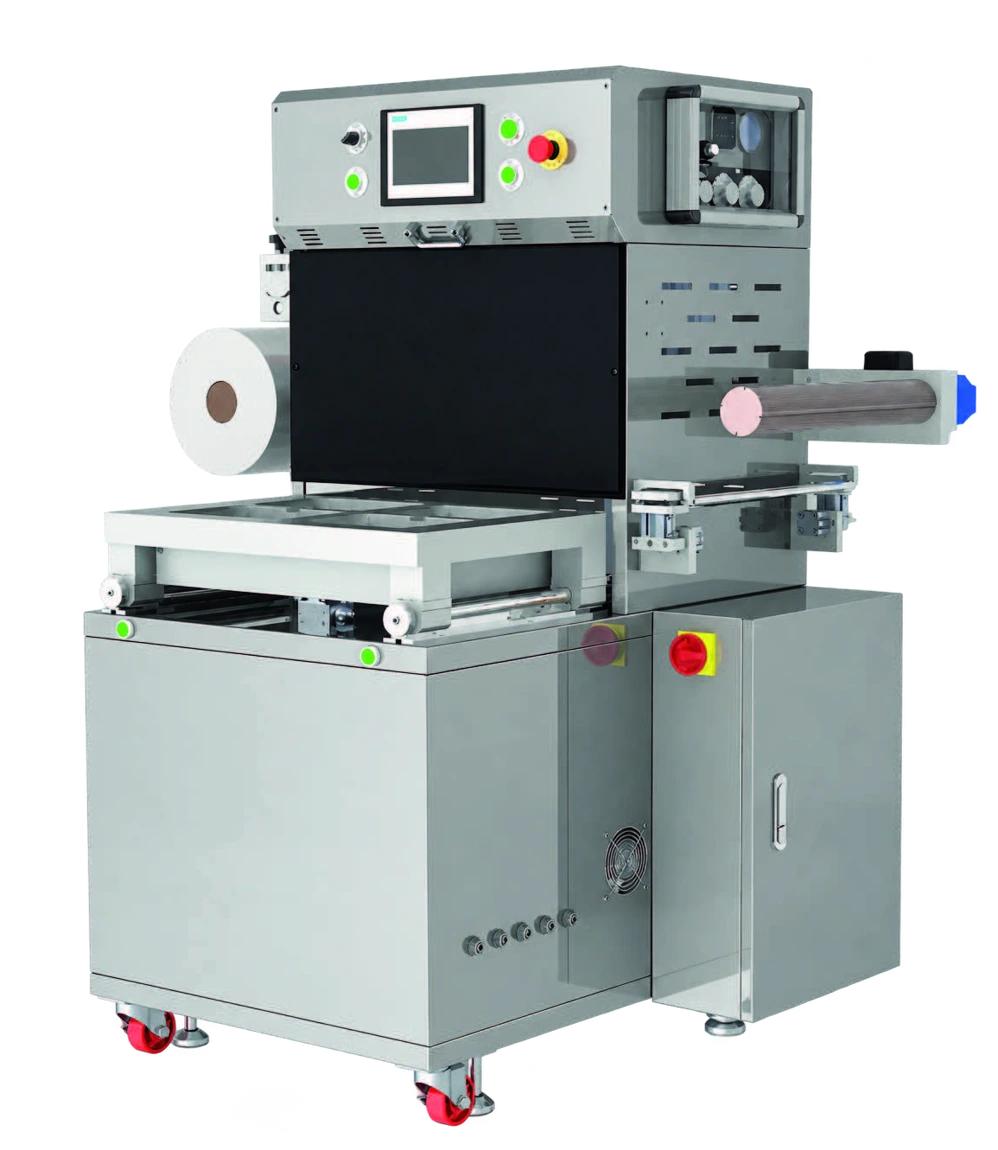
M-450
Hand-loaded trays · machine shown
Hand loading lets the operator check portion height and spot any sauce on the rim before placing a tray in the M-450 tool. Match the tool layout to the tray and any dividing ribs.
Prepared foods
Sauce or oil on the flange can interrupt the seal, while tall pieces can touch the lid. Start with a filled tray and the temperature at which it reaches the sealing station.
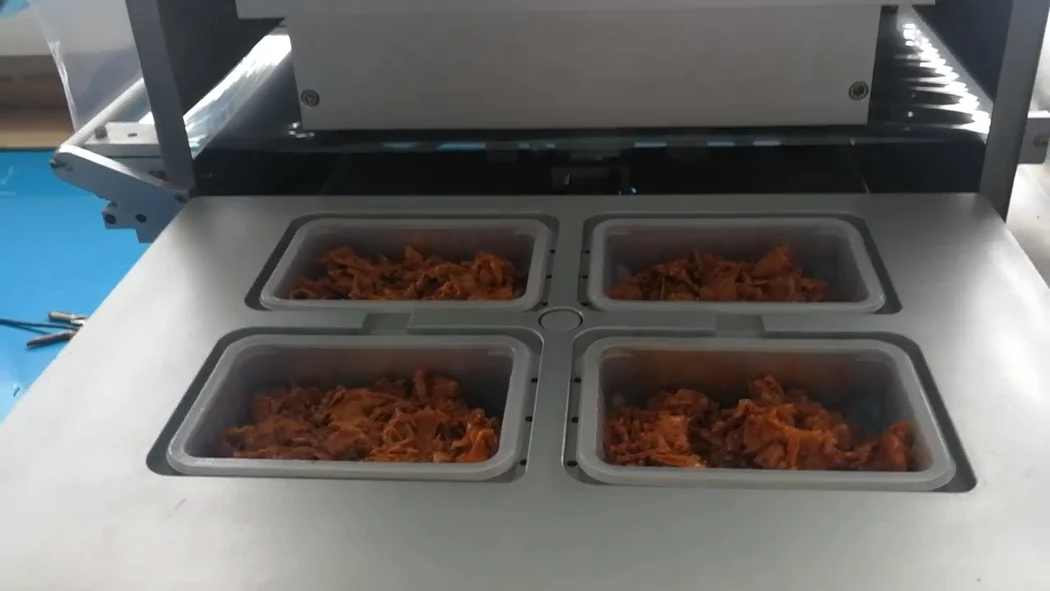
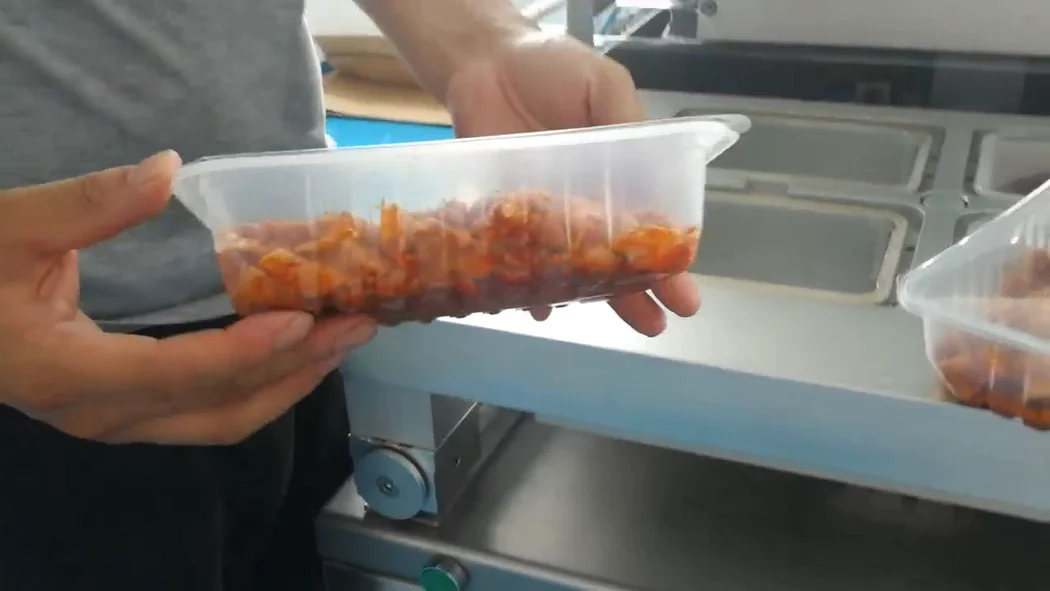
The M-450 video follows a carrier of four filled trays. For your meal tray, all three machines support modified atmosphere packaging, vacuum skin packaging and tray sealing without gas exchange. Specify any required clearance above the food and which compartment edges must seal.
Hand-loaded trays · machine shown
Hand loading lets the operator check portion height and spot any sauce on the rim before placing a tray in the M-450 tool. Match the tool layout to the tray and any dividing ribs.
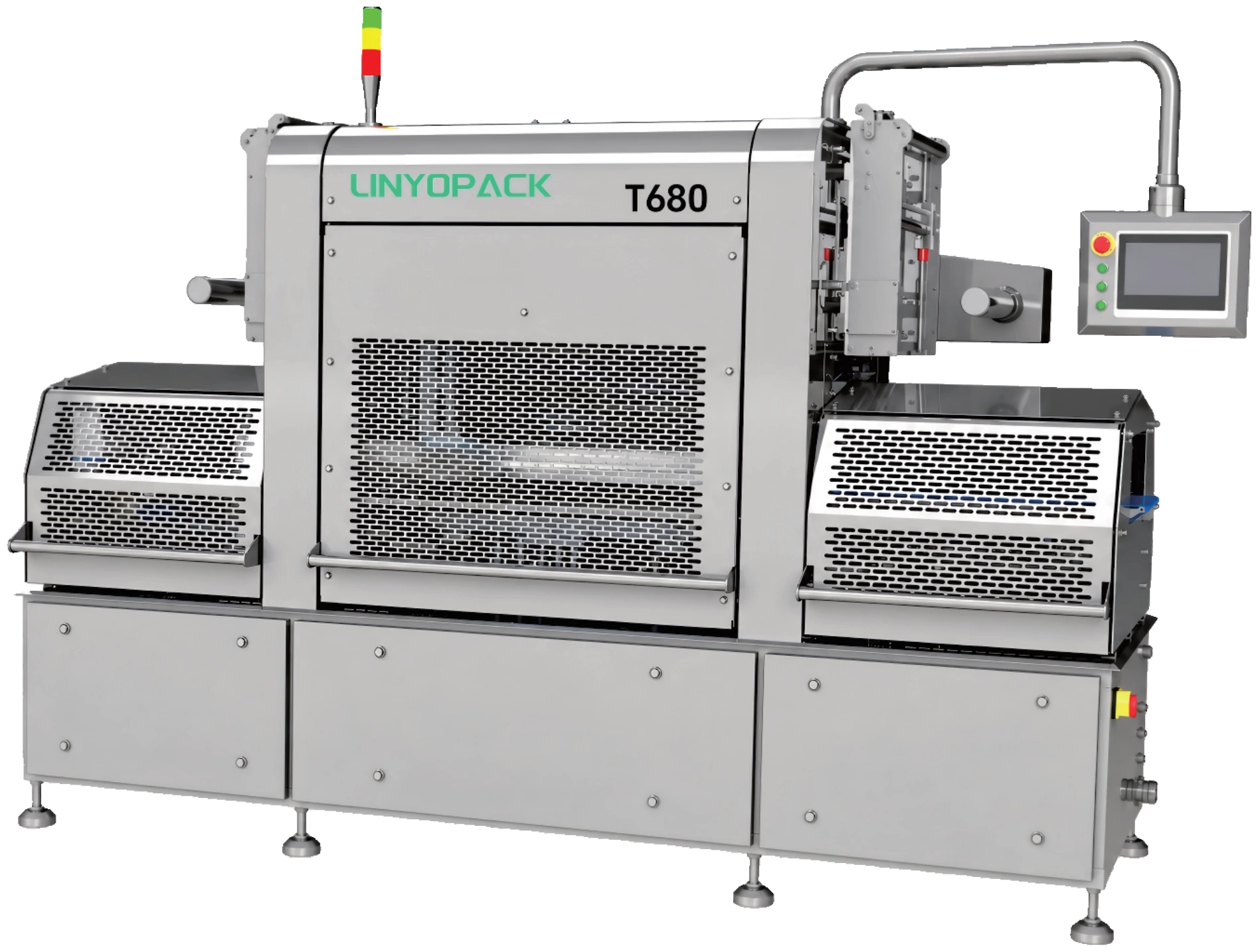
For automatic tray feeding
The T680 feeds and positions filled trays automatically. Specify the tray dimensions and check that food and sauce stay in their compartments during transfer.
Vacuum skin packaging
Requires a modified T680 with four-cavity tooling.
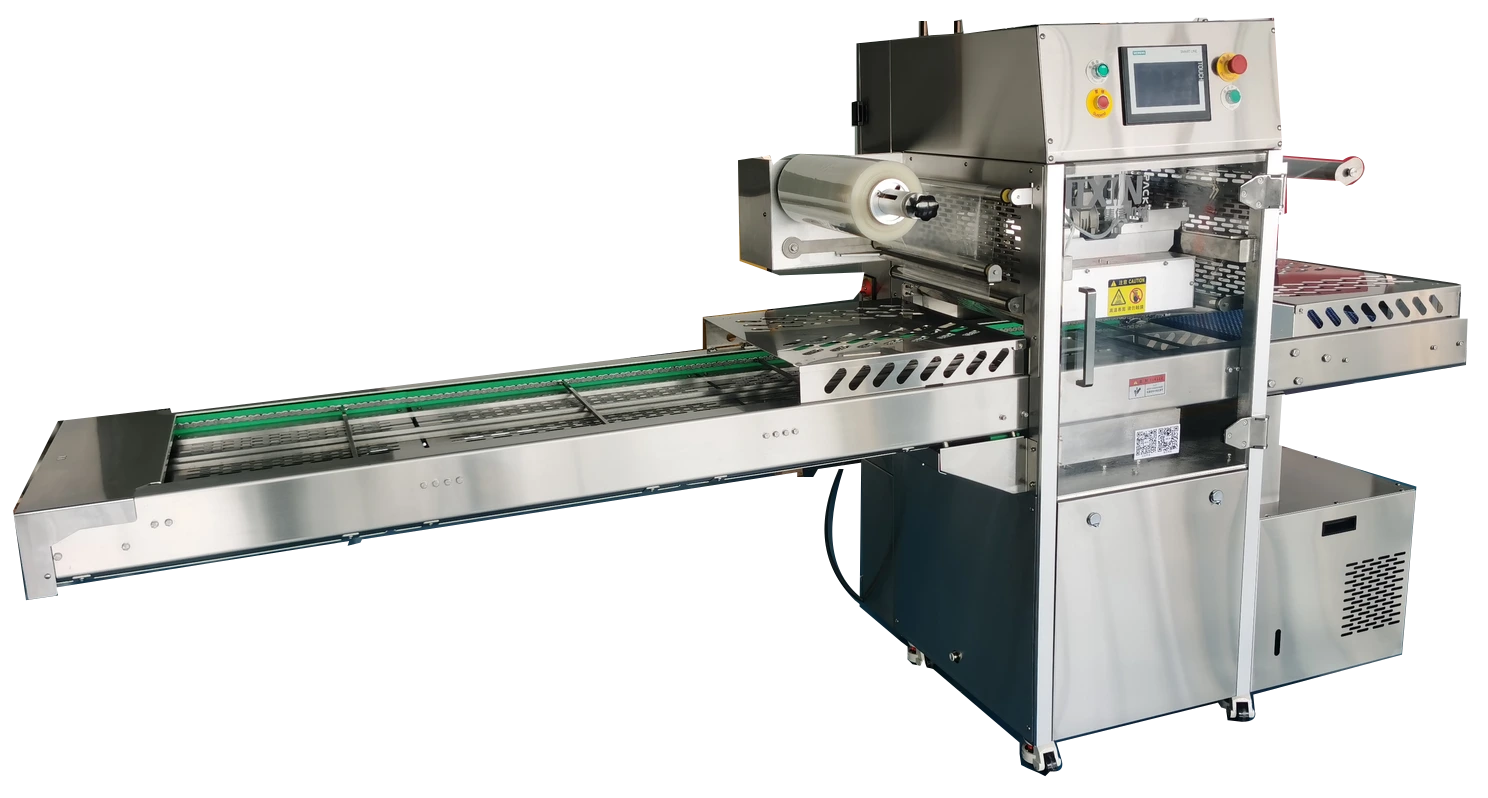
For a continuous flow of meal trays
For the DZML-450 conveyor, check the spacing of successive trays and whether sauce reaches the flange at transfer. Include the lidding film and the tray drawing.