
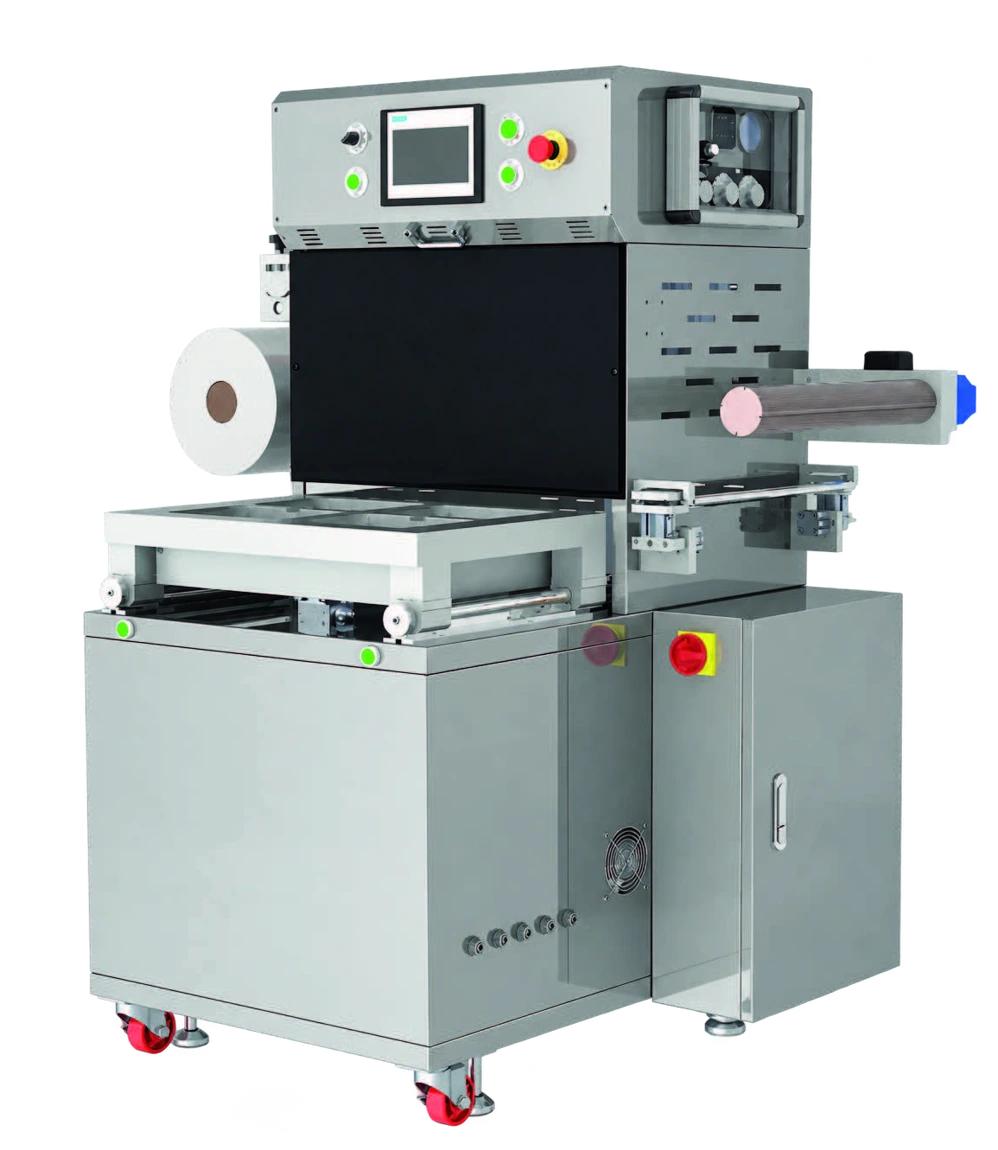
M-450
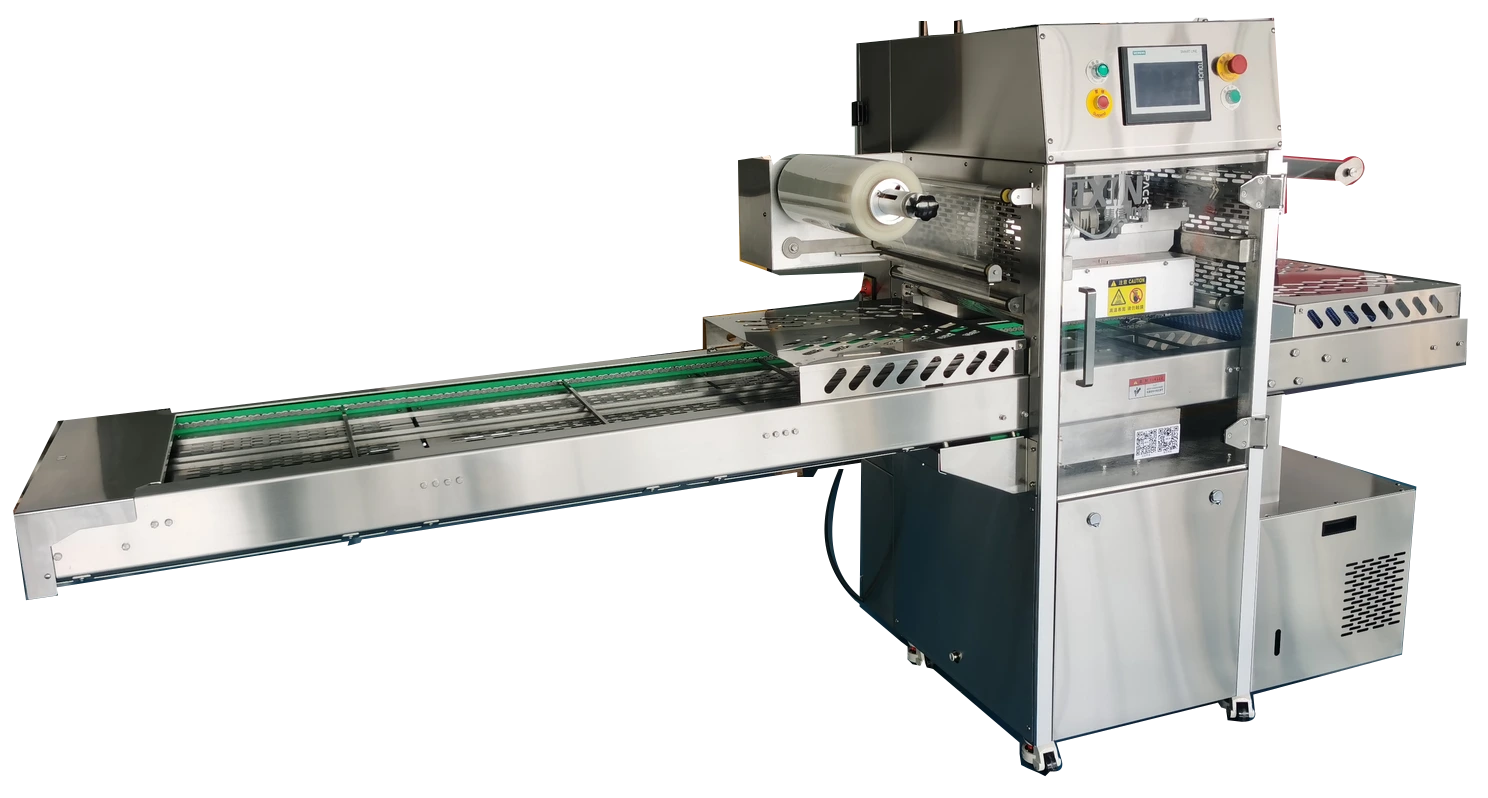
Hand-loaded cups · machine shown
An operator loads a group of cups in the M-450 carrier. Compare the cup diameter, flange width and number of cups per load with the proposed tool.
Fresh-cut fruit
Loose arils can roll onto the cup rim, and juice can reach the sealing surface as the carrier moves. Cup support and fill height both matter when choosing tooling.
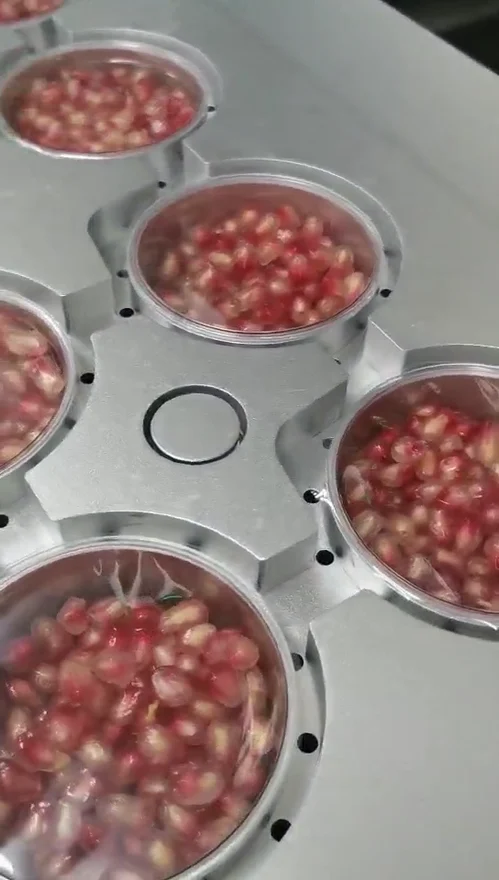
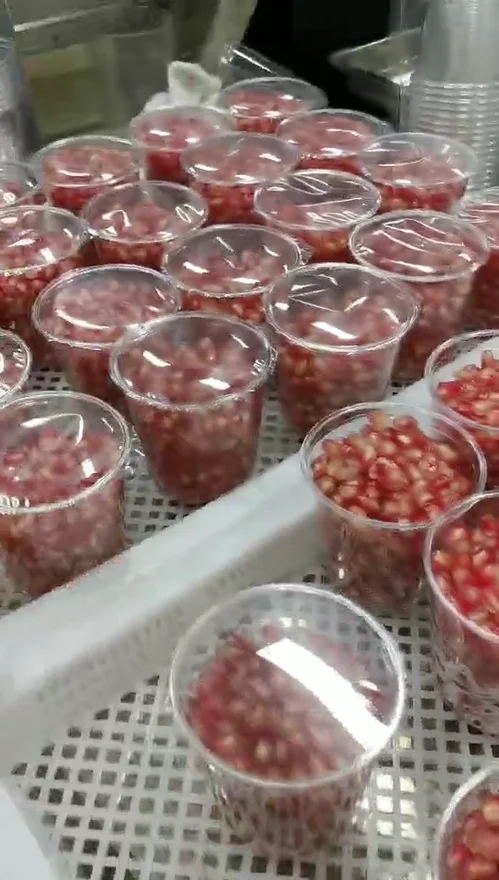
The M-450 demonstration shows filled cups in a carrier. For your own line, all three machines support modified atmosphere packaging, vacuum skin packaging and tray sealing without gas exchange. Specify the film clearance the arils need before choosing how to feed the cups.
Hand-loaded cups · machine shown
An operator loads a group of cups in the M-450 carrier. Compare the cup diameter, flange width and number of cups per load with the proposed tool.
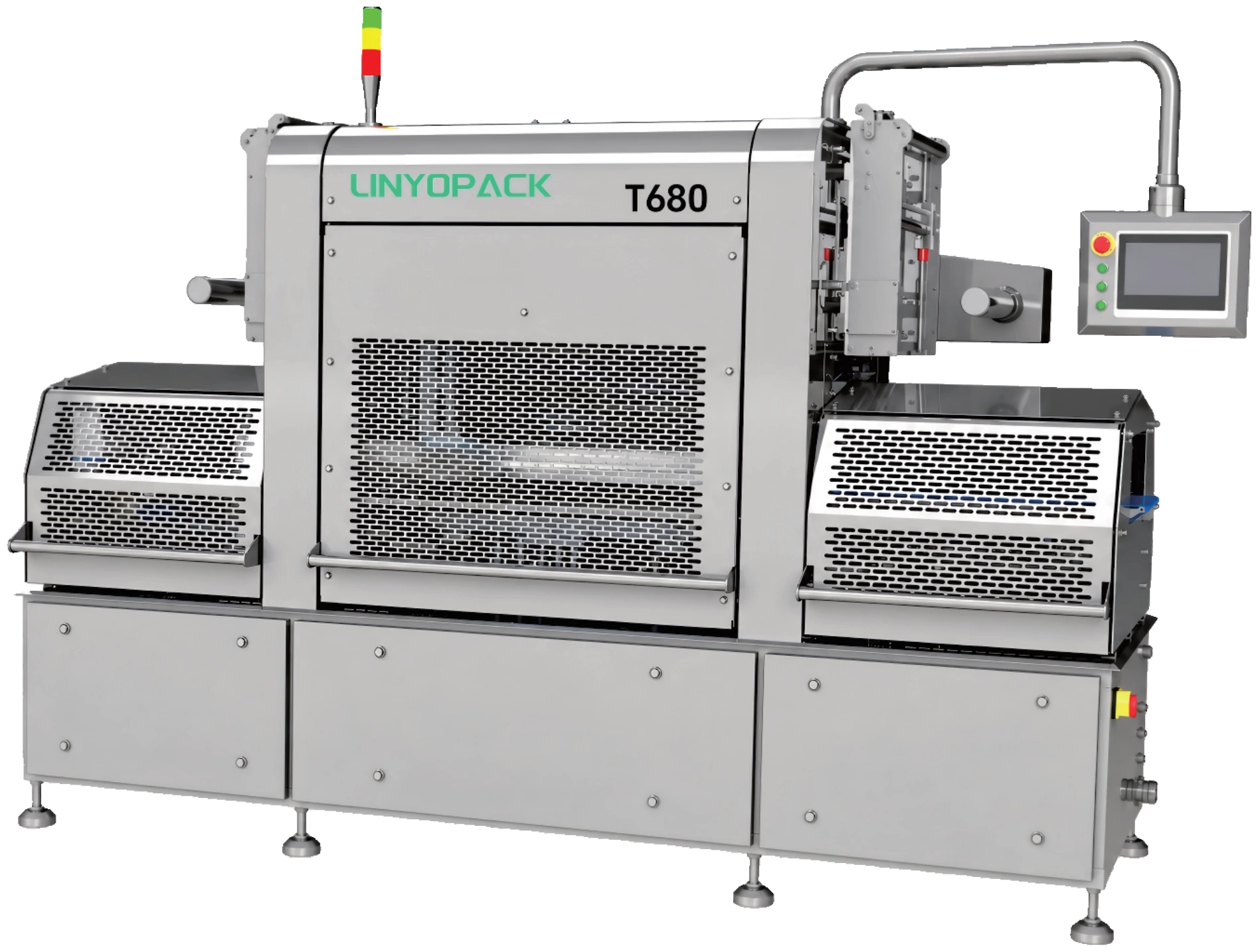
For automatic cup feeding
Consider the T680 when the line calls for servo-driven feeding and positioning. Confirm that the cup base is stable in transfer and that the tool supports the rim.
Vacuum skin packaging
Requires a modified T680 with four-cavity tooling.
For cups arriving on a continuous conveyor
For a DZML-450 line, check that the filled cups remain upright through the transfer and that loose arils and juice stay clear of the flange.