
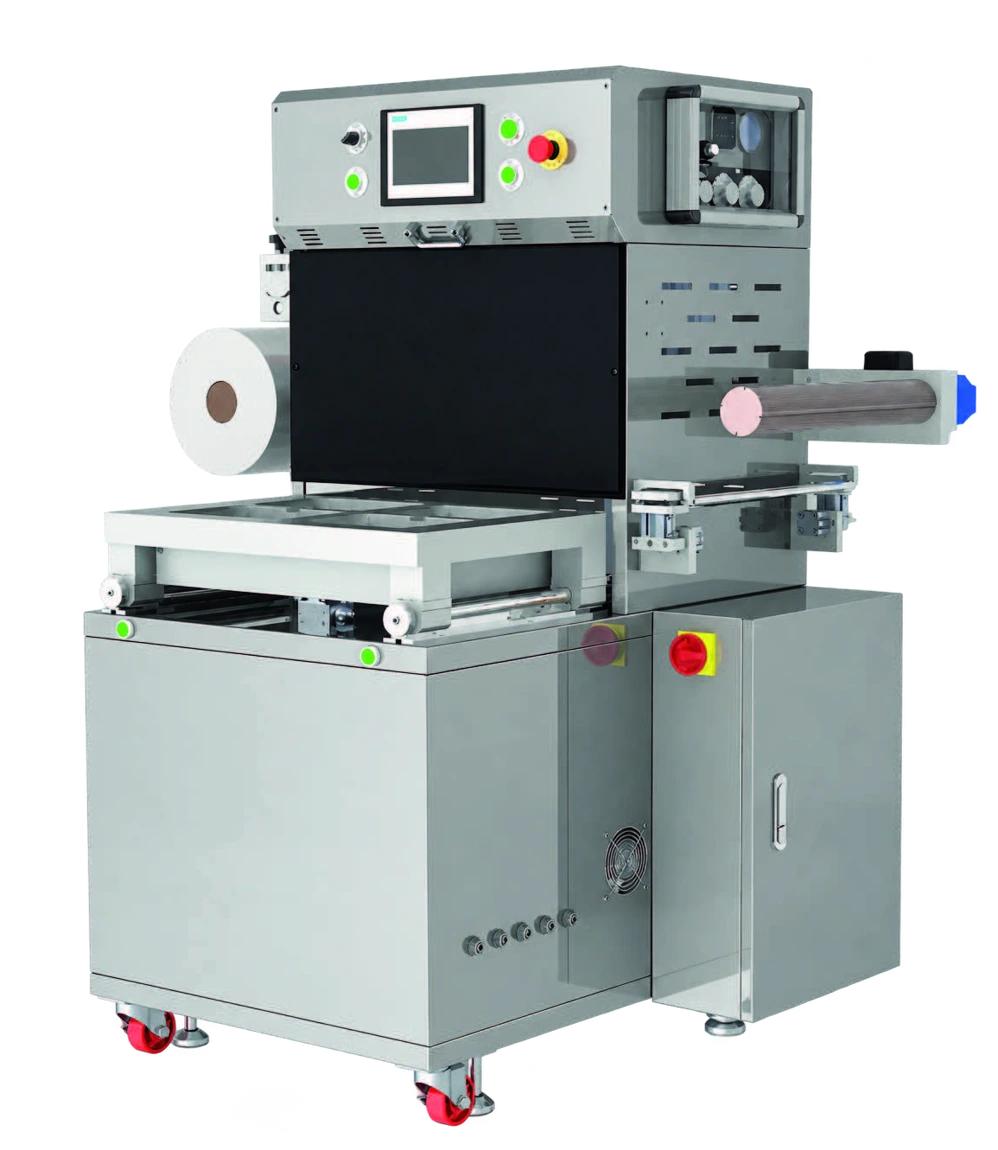
M-450
Hand loading for changing pack sizes
The operator loads and removes the trays on the semi-automatic M-450. For short runs of several slice counts, give the tallest stack and the number of trays the operator handles together.
A stack of cheese slices can spread towards the rim as the tray moves. A firm block may stay in place but leave too little room between its upper corners and the lid. Measure both formats as they will sit in a finished pack.
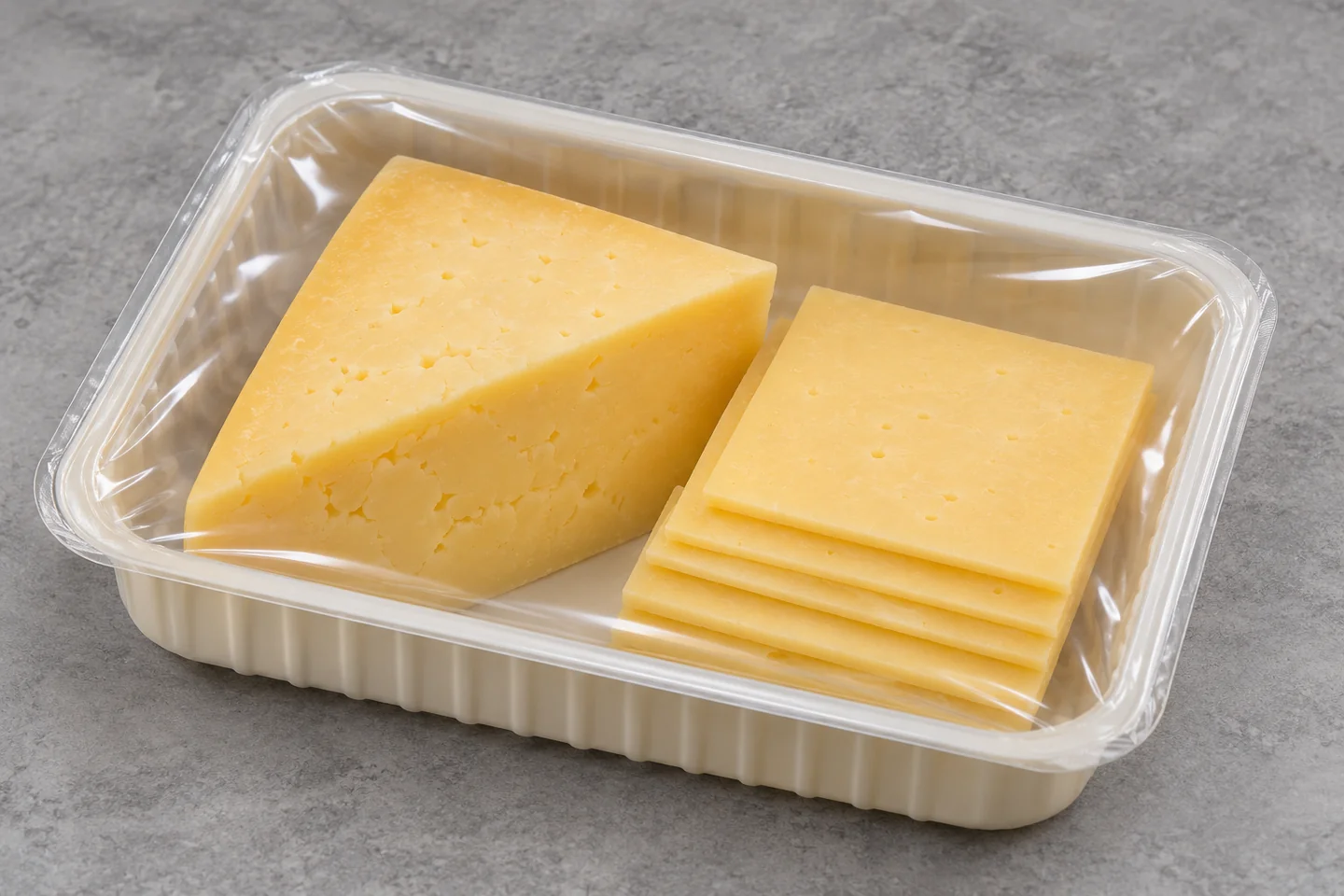
Include the slice counts or block sizes you run in a shift and the required packs per hour for each. LINYOPACK can then confirm the machine configuration and tooling for the filled tray.
Hand loading for changing pack sizes
The operator loads and removes the trays on the semi-automatic M-450. For short runs of several slice counts, give the tallest stack and the number of trays the operator handles together.
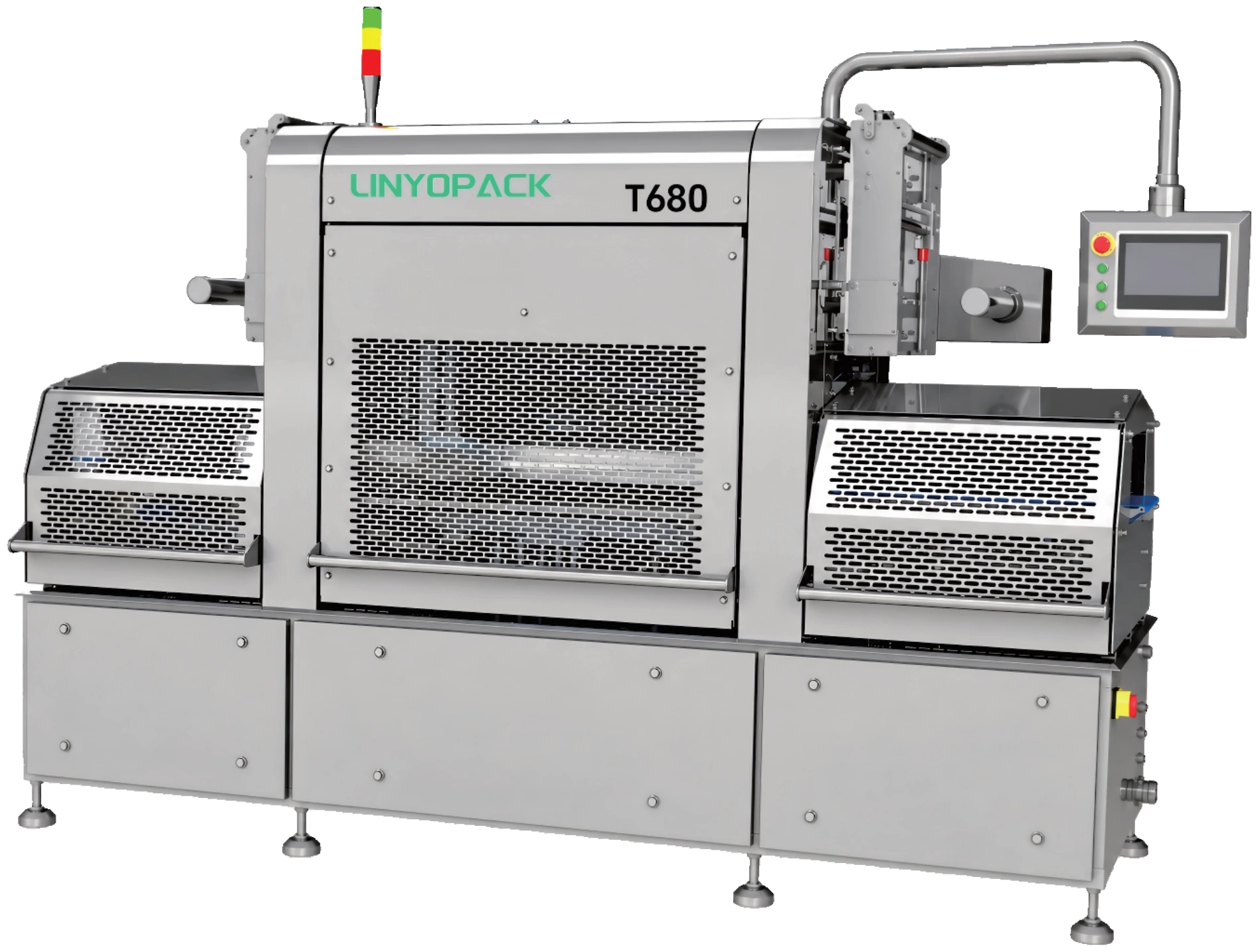
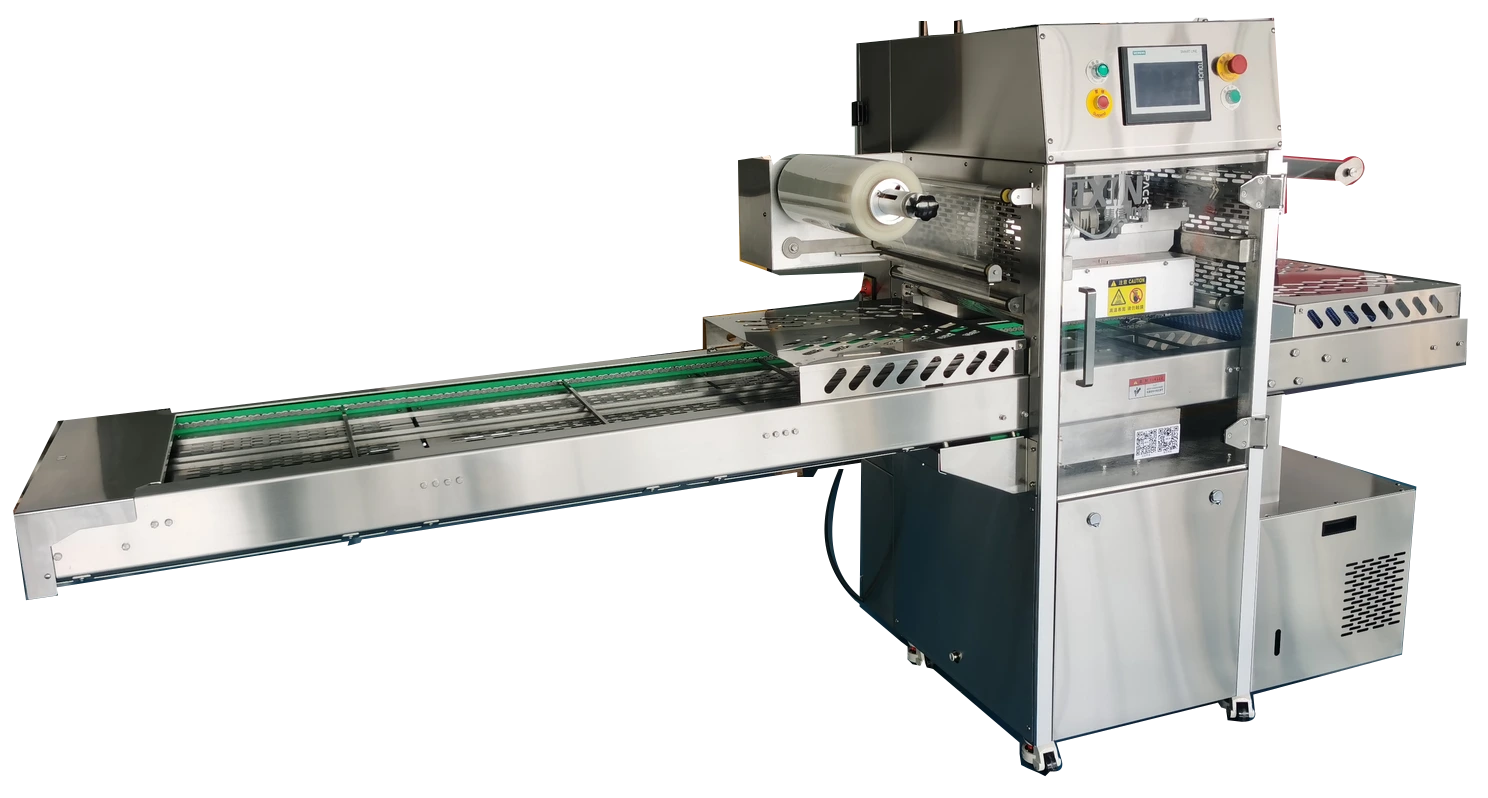
Continuous conveyor feed for filled trays
The DZML-450 takes trays on a conveyor. Give the base dimensions and orientation of the tray, plus the gap between arriving packs. Check whether a heavy cheese block slides towards a corner during transfer.