
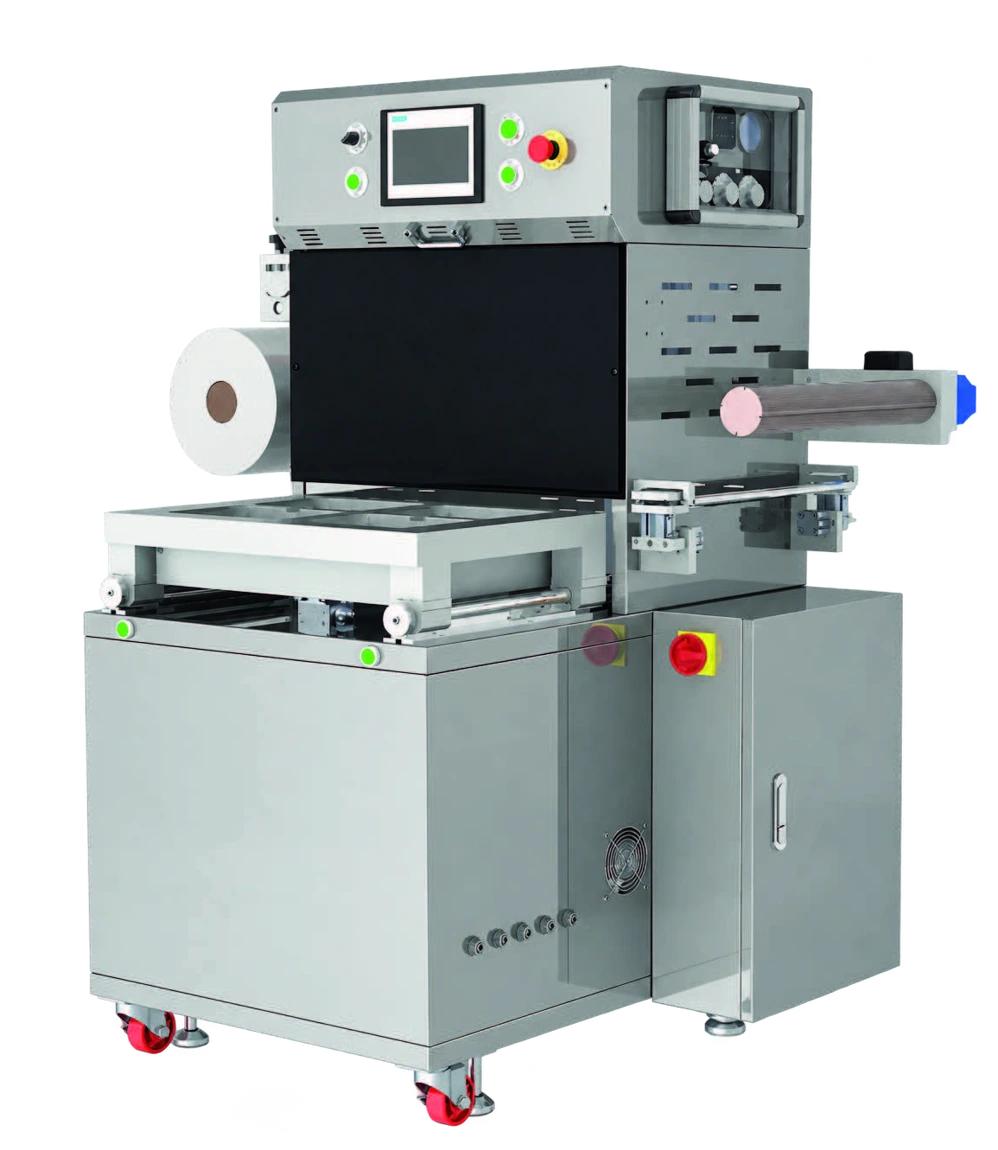
M-450
For hand-loaded MAP batches
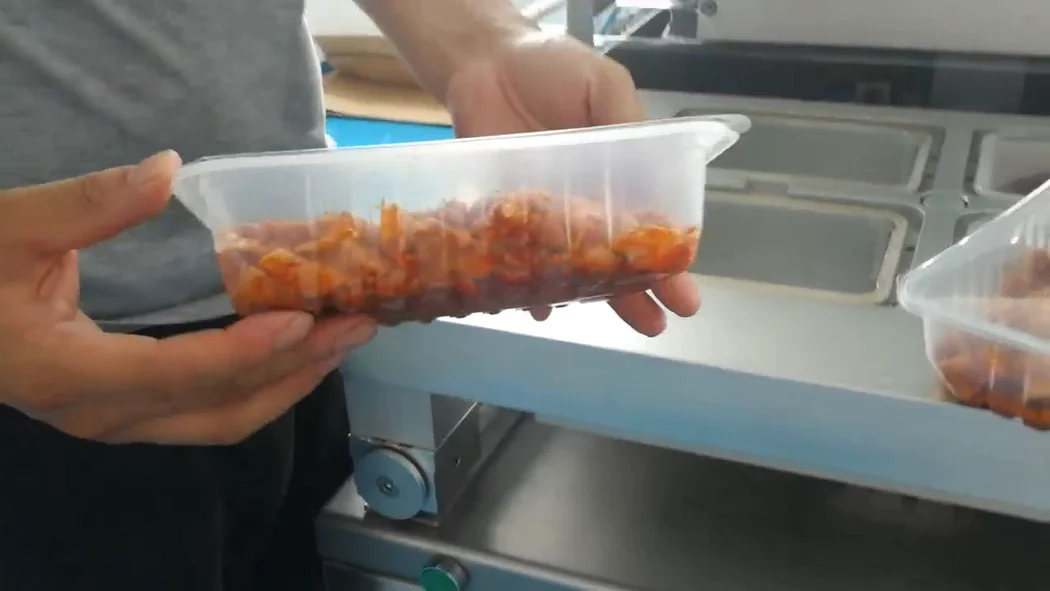
The documented MAP setup uses manual loading and unloading. Check how the operator places the filled tray so the rim and any ribs that must seal stay free of rice or sauce.
For a divided tray with rice and a side dish, decide which dividing ribs, if any, must seal to the film. The fill height in each compartment and the shape of the tray determine what the sealing tool needs to contact.
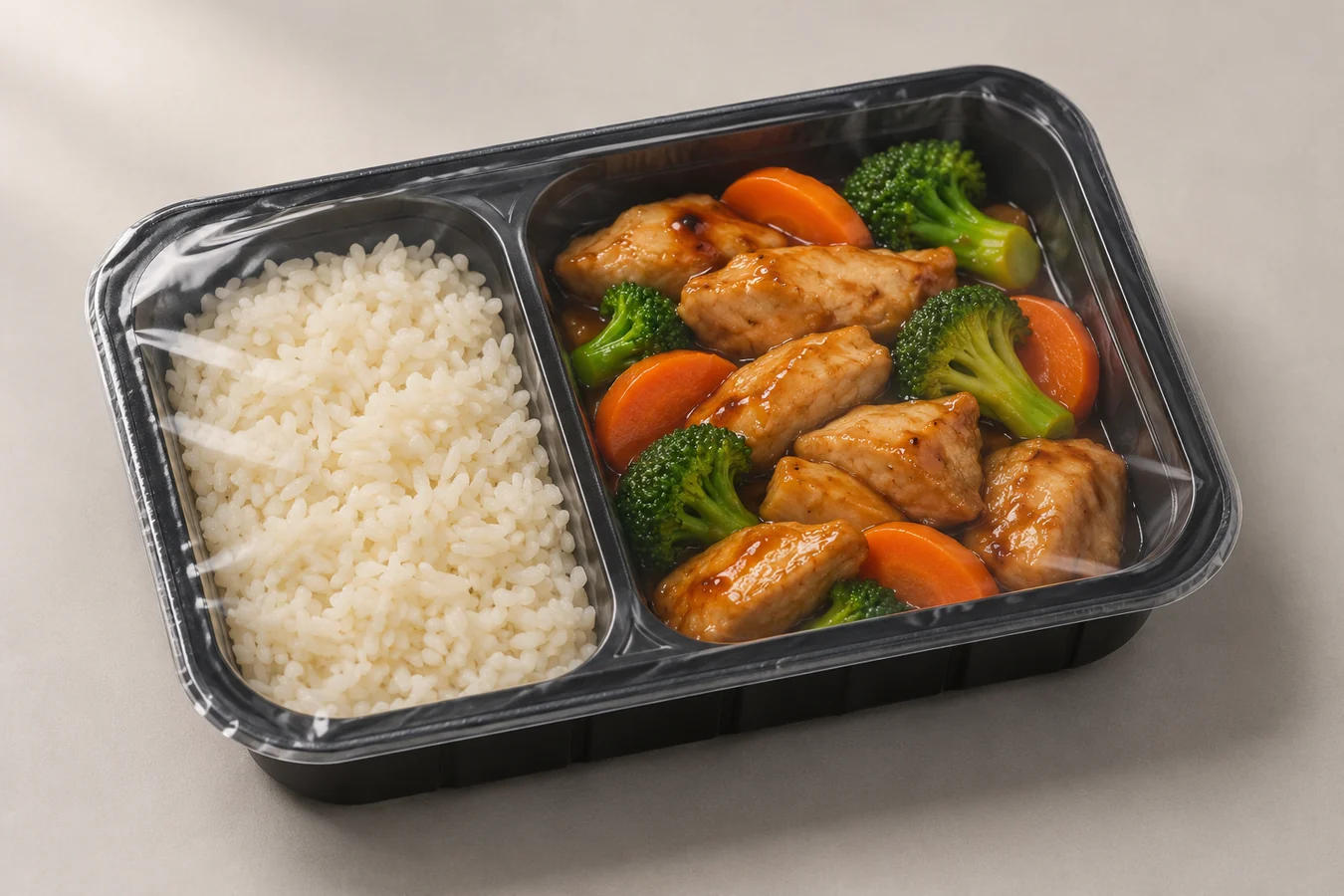
Start by marking the outer rim on the tray drawing. If compartments need separate seals, mark the internal ribs that must meet the film and give their height relative to the outer rim. Check that rice grains or a sauced side stay clear of those surfaces as the filled tray moves to the sealer.
Compare how each machine takes in a filled tray. Ask how the proposed tooling will support the tray and seal the outer rim and any specified internal ribs.
For hand-loaded MAP batches
The documented MAP setup uses manual loading and unloading. Check how the operator places the filled tray so the rim and any ribs that must seal stay free of rice or sauce.
For automatically fed meal trays
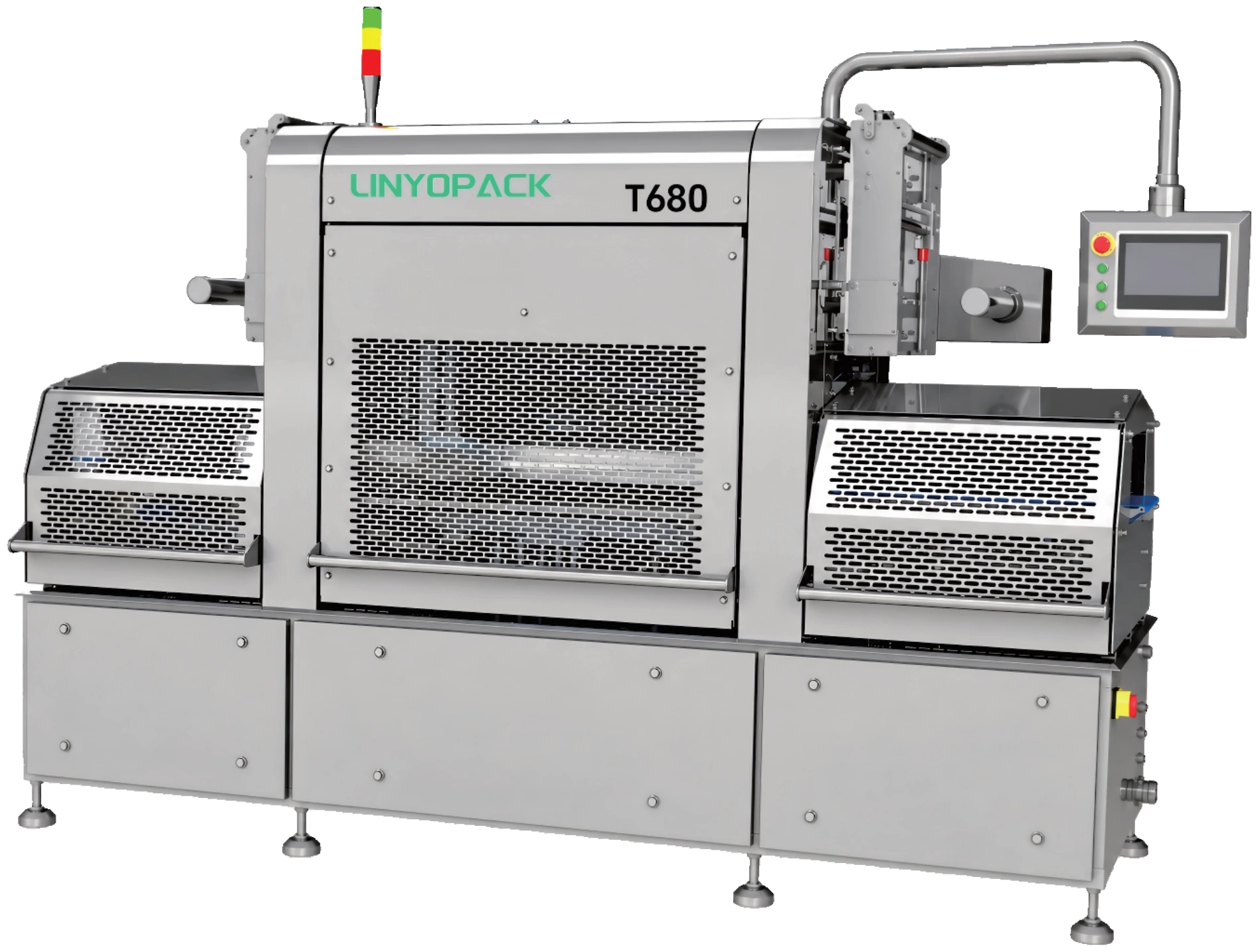
The T680 feeds and positions trays automatically. Share the handoff from filling and check whether food spills onto the rim or onto any rib that the tooling must seal.
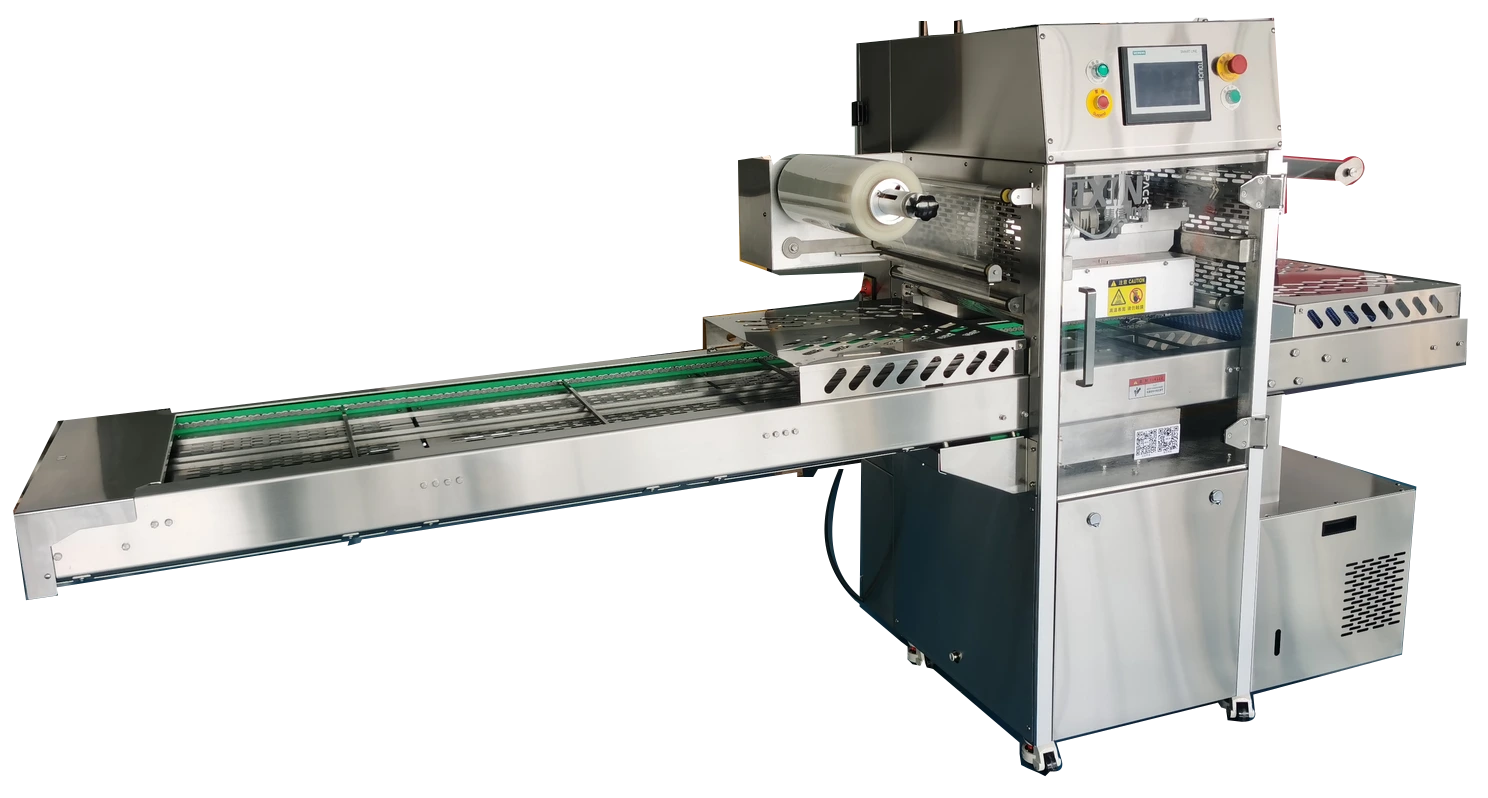
Compare for conveyor-fed meal trays
The documented conveyor demonstration uses seal-only tray packaging. For a DZML-450 MAP quote, specify tray spacing, filled height and where the tooling needs to meet the rim and internal ribs.