
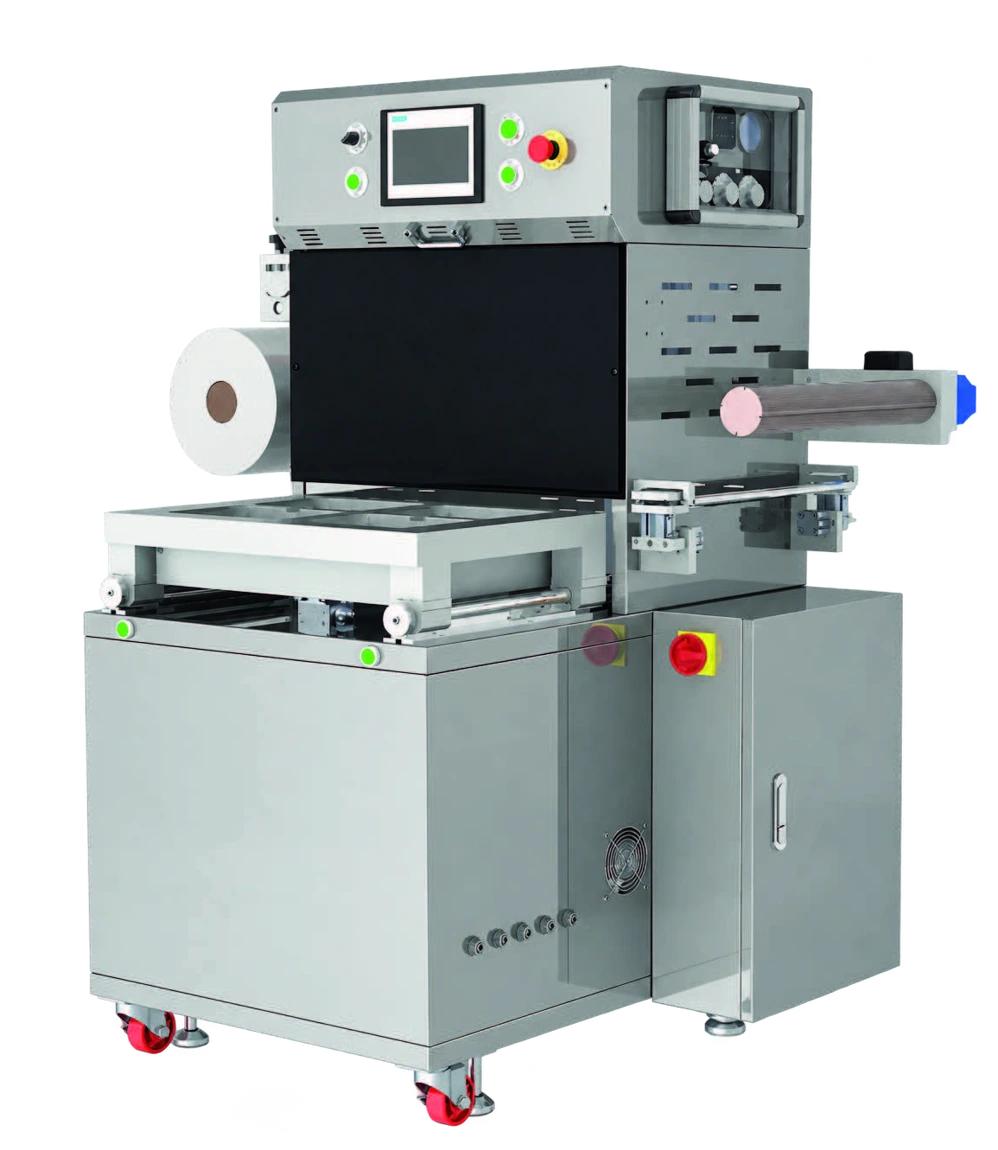
M-450
Hand-loaded cups · machine shown
Hand loading gives the operator a chance to centre each portion in its cup. For the M-450 tool, give the maximum crown height and cup profile.
Tropical fruit
The rounded top of a peeled coconut can sit above the cup rim. The height of the largest piece and the way it sits in the cup determine how much clearance the sealing tool needs.
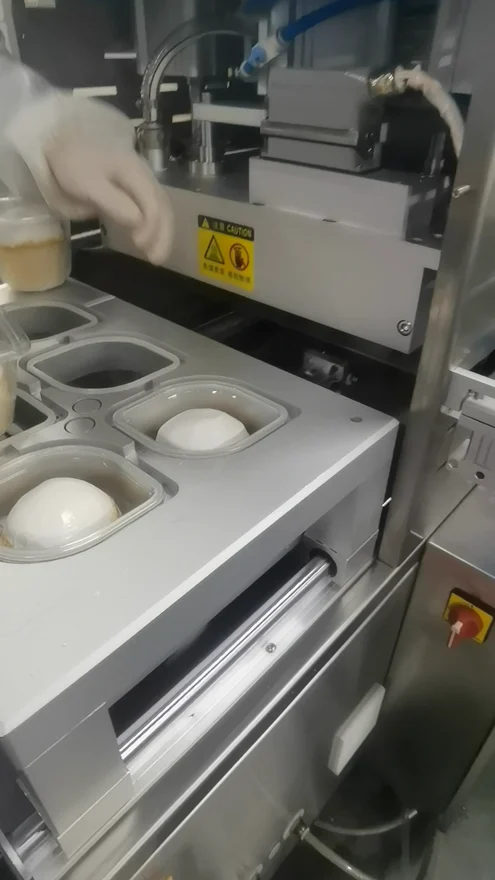
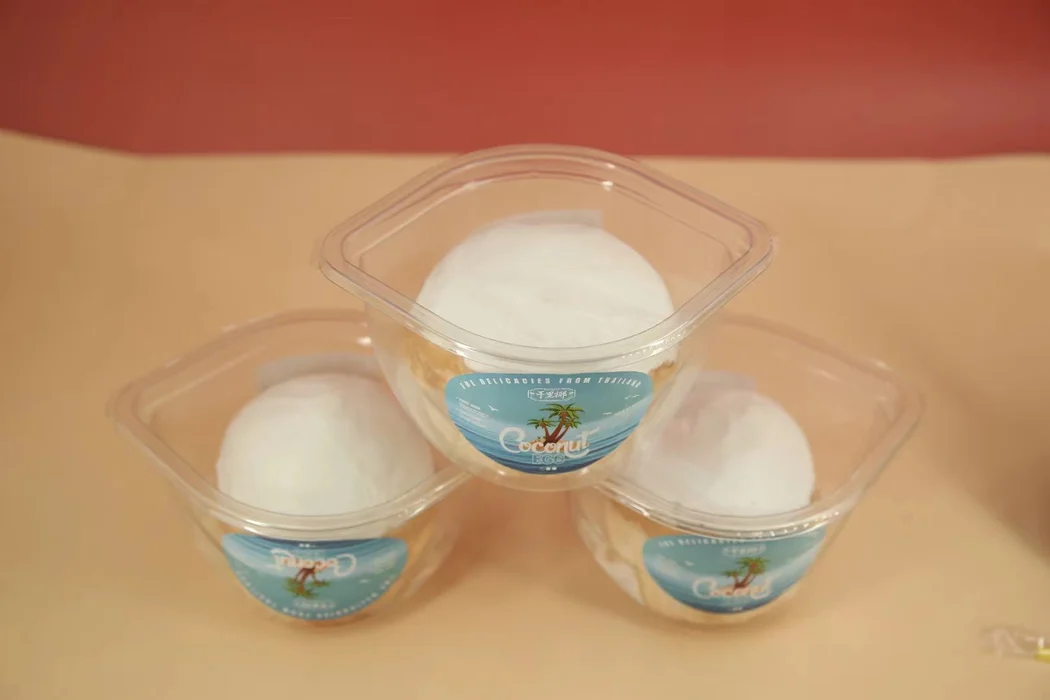
The M-450 demonstration shows cups supported in round pockets. Each machine supports modified atmosphere packaging, vacuum skin packaging and tray sealing without gas exchange. For a flat lid, allow space above the crown. For a skin pack, check the film draw over the fruit and the bond to its support.
Hand-loaded cups · machine shown
Hand loading gives the operator a chance to centre each portion in its cup. For the M-450 tool, give the maximum crown height and cup profile.
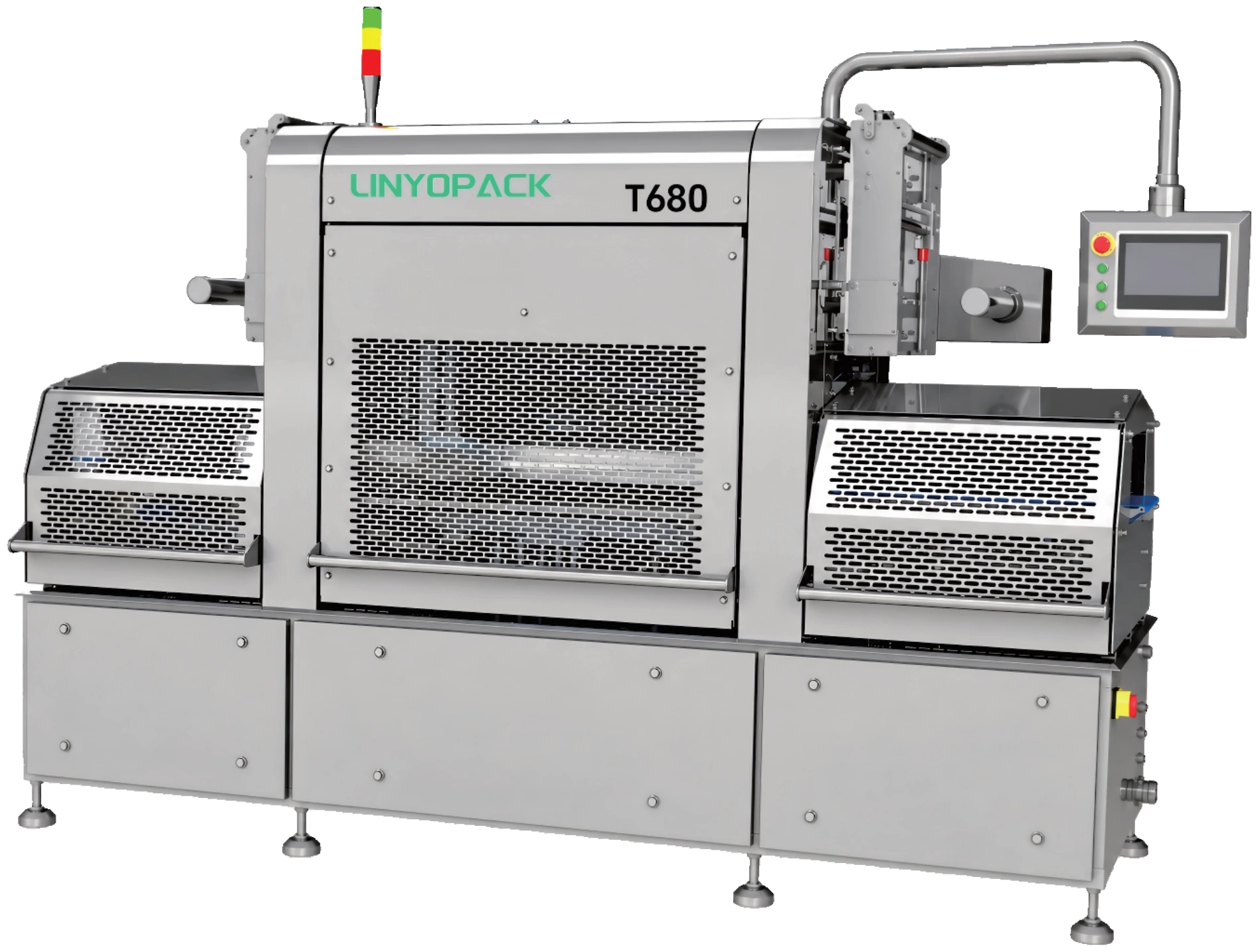
For automatic cup feeding
The T680 feeds and positions cups automatically. Check the stability of the tallest filled cup and the clearance above the coconut at the sealing station.
Vacuum skin packaging
Requires a modified T680 with four-cavity tooling.
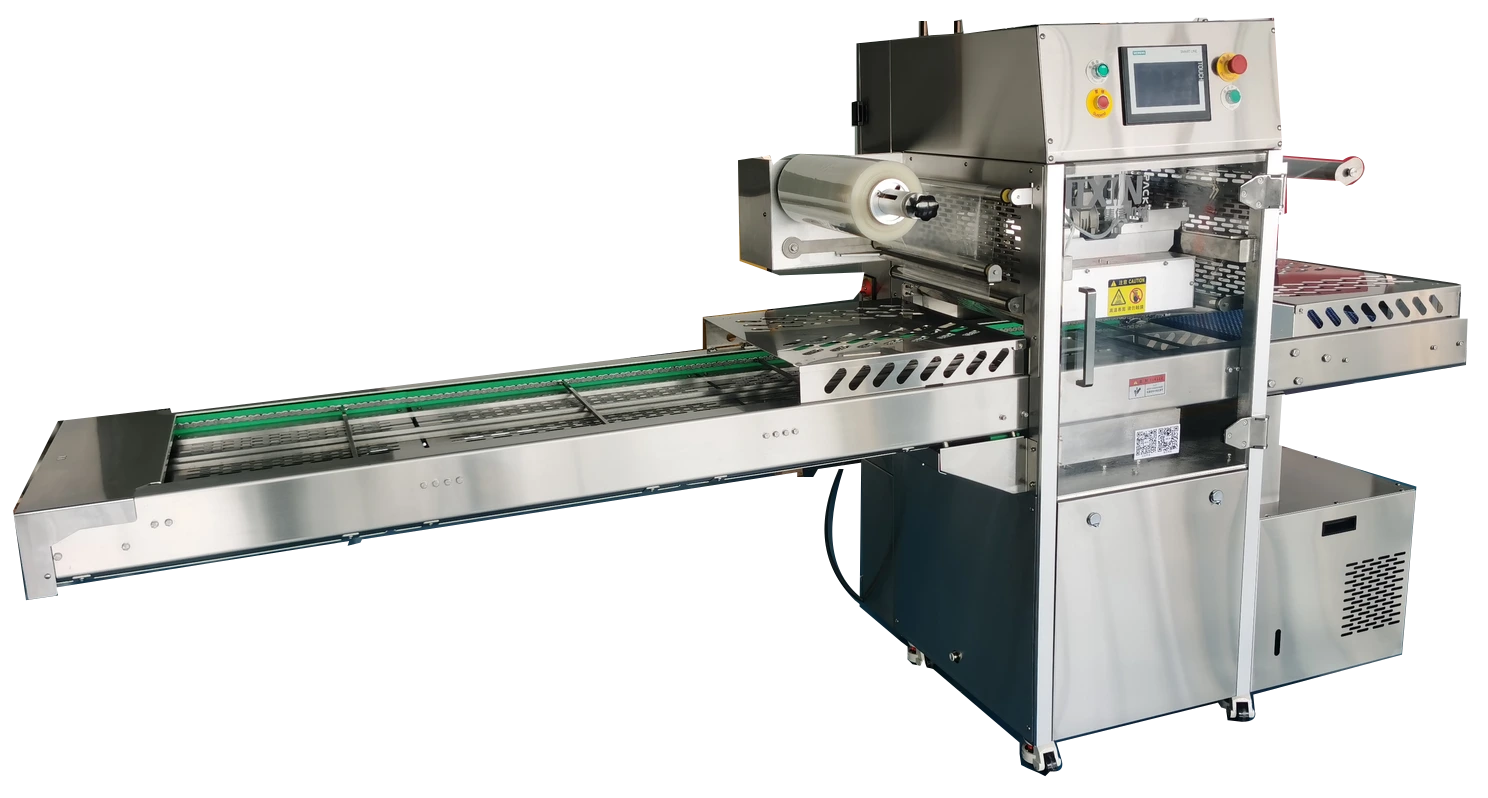
For a continuous flow of filled cups
For the DZML-450 conveyor, specify the cup base and the spacing between delivered cups. Check whether a tall coconut shifts or tips as the cup crosses the transfer.